NATURE’S BOUNTY EXHIBITION @ IN THE WILD
Welcome to your digital catalogue for Nature’s Bounty. Numbers alongside each framed image or collection in the gallery correspond to the information below.
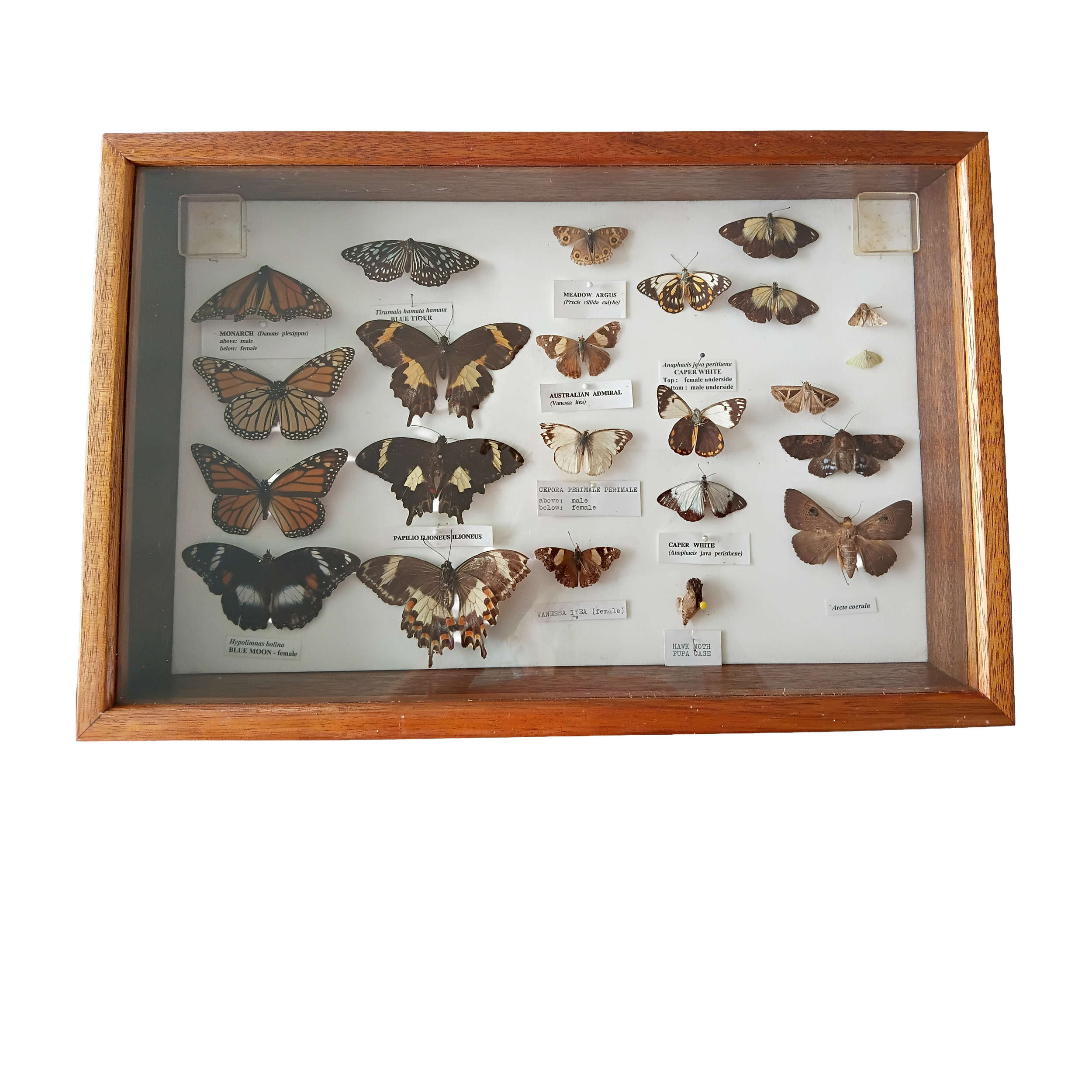
All living things are interconnected; depending on one another to survive. The butterflies that pollinate our beautiful plants, the creatures that turn over our soils.
CONNECTION (GALLERY A)
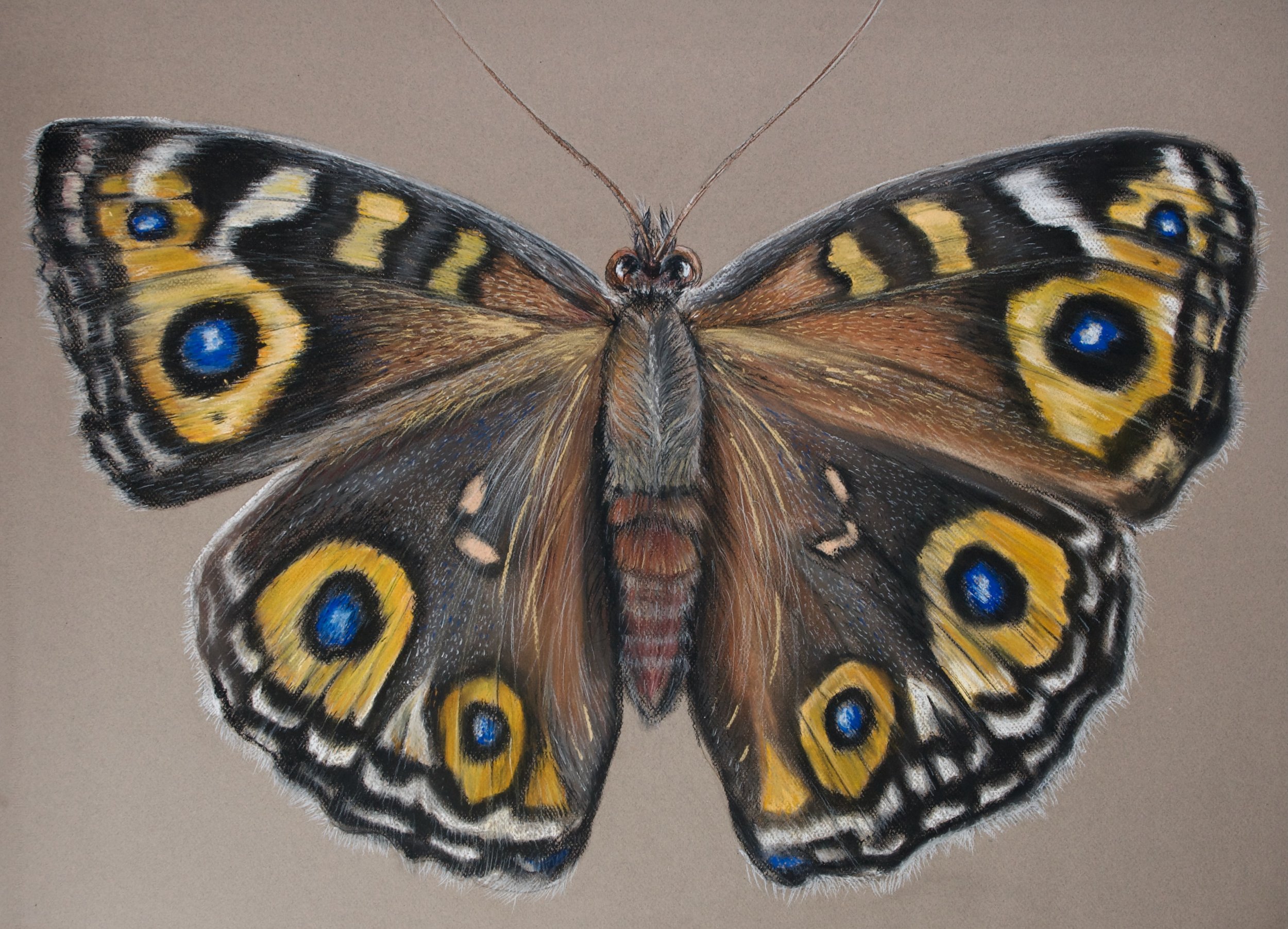
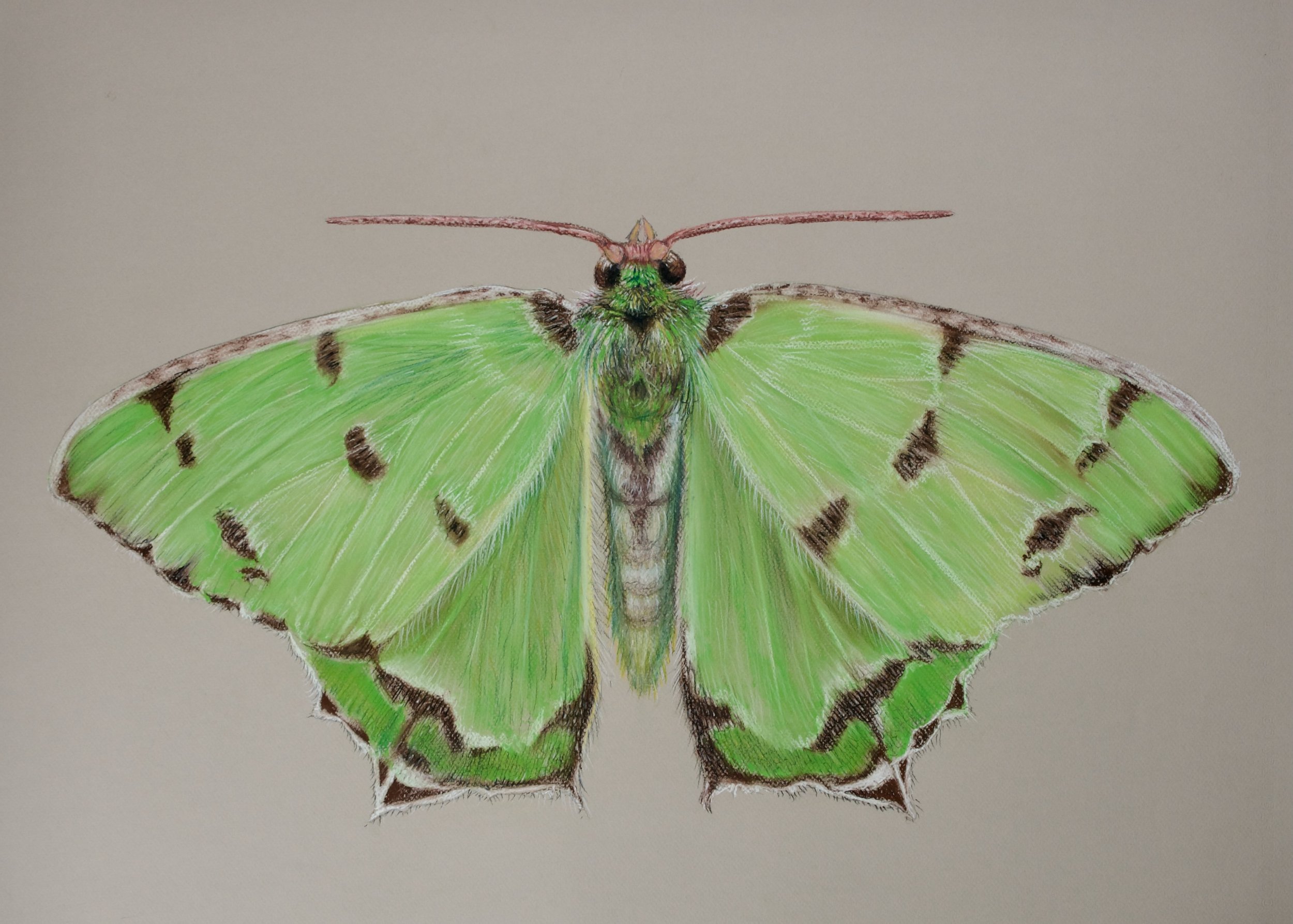
1. BUTTERFLIES & MOTHS
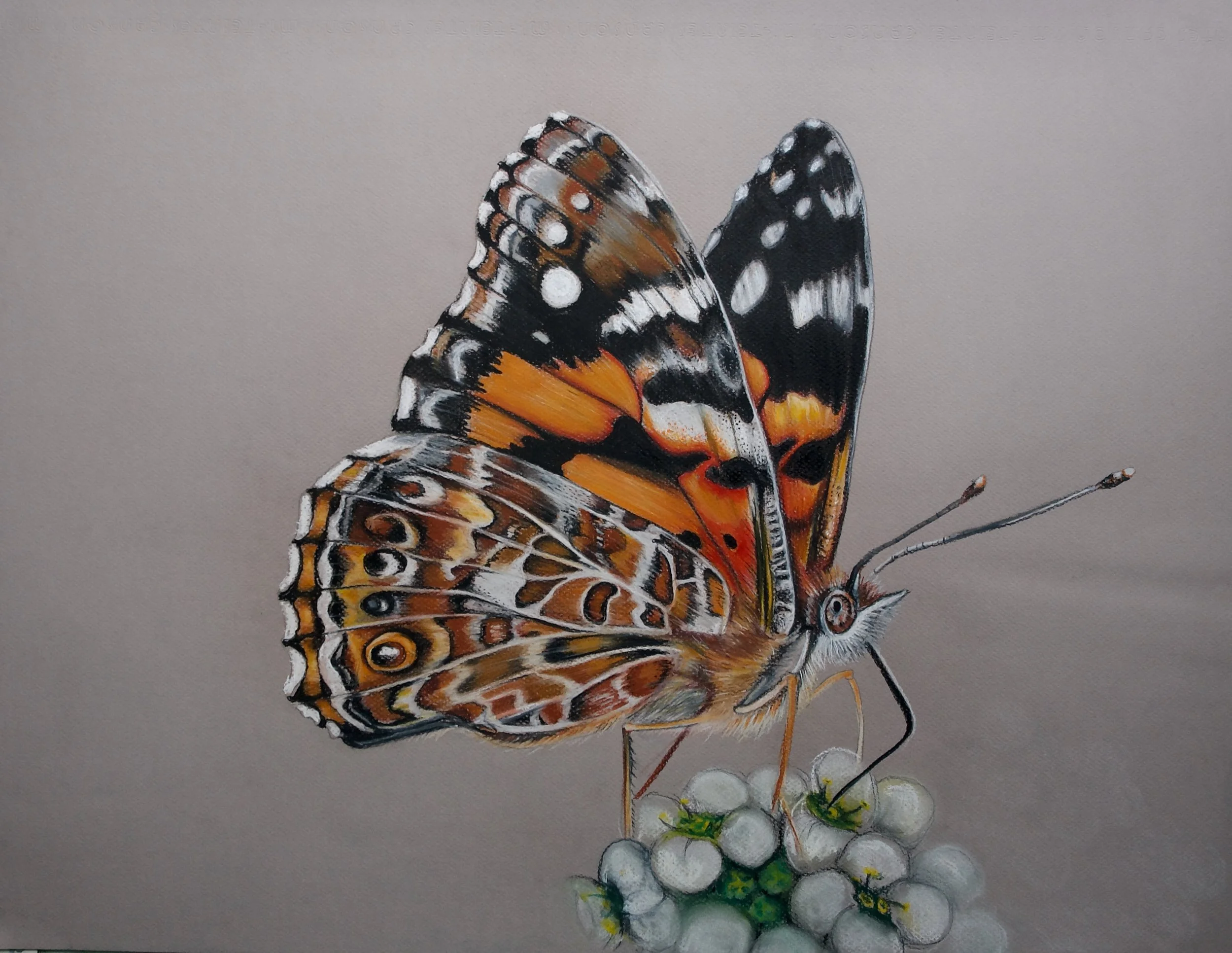
These images pay homage to Maurge Jowett - the first President of the Flora & Fauna Society, established on Norfolk Island in 1967. During the 1970s and 80s, Maurge and her husband Freddie collected insects for world-renowned entomologist, Jeremy Holloway, of the Natural History Museum in London. These illustrations feature two fairly common species on Norfolk; the Meadow Argus and Emerald Moth - Agathia jowettorum - which was named in Maurge and Freddie’s honour.
2. THE ART OF COLLECTING
With a new generation of research scientists turning their attention to the biota of Norfolk, we remain hopeful that new discoveries - rather than reports of new extinctions - will continue to carry the day. Certainly James Tweed, who made the study of our invertebrates the focus of his recent PhD, seems to think so! In 2025 he estimated that of the 1300 + species represented here on Norfolk, some 300 of those that are yet to be formally described, are likely to be recognised as endemics.
3. ENDEMIC FLORA
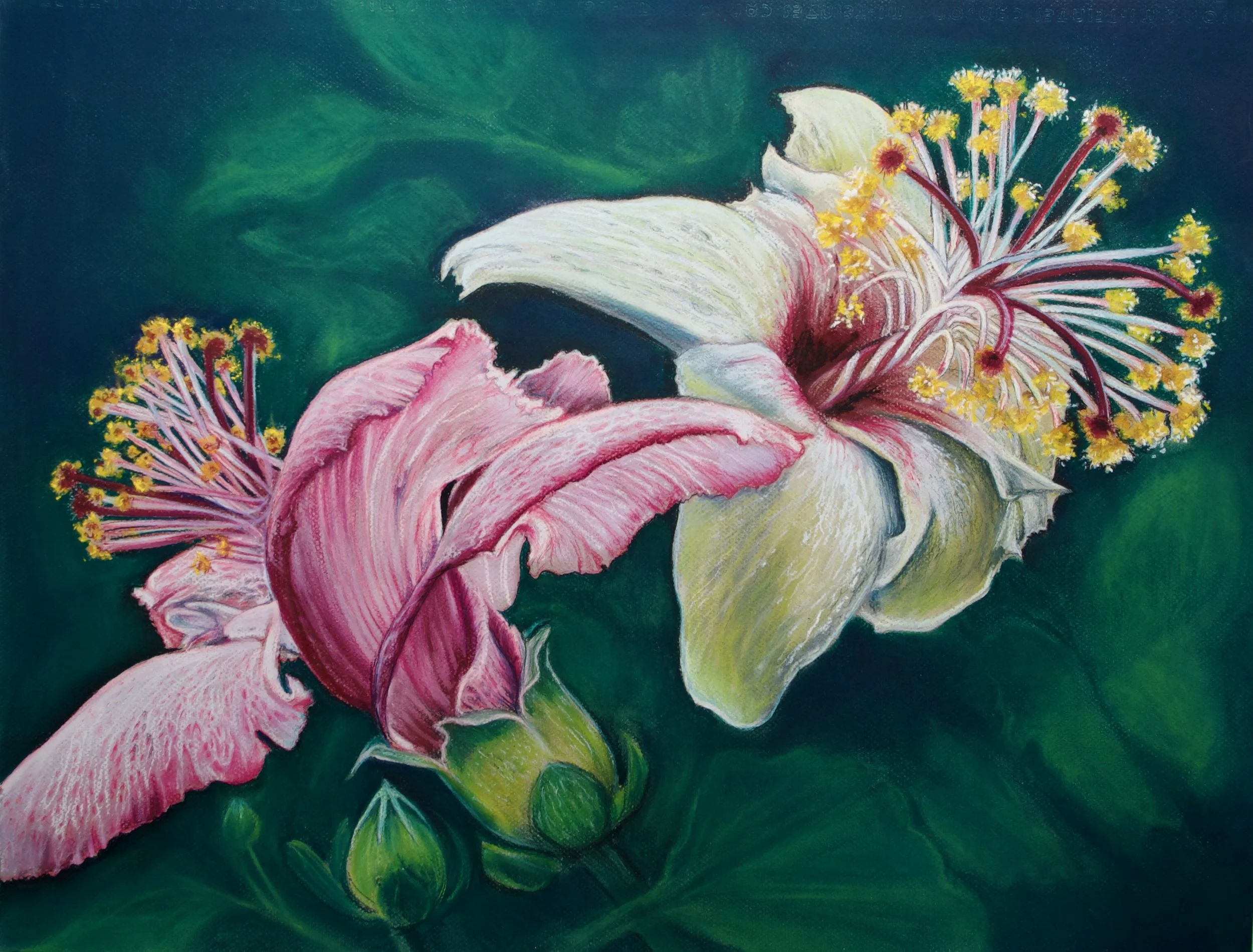
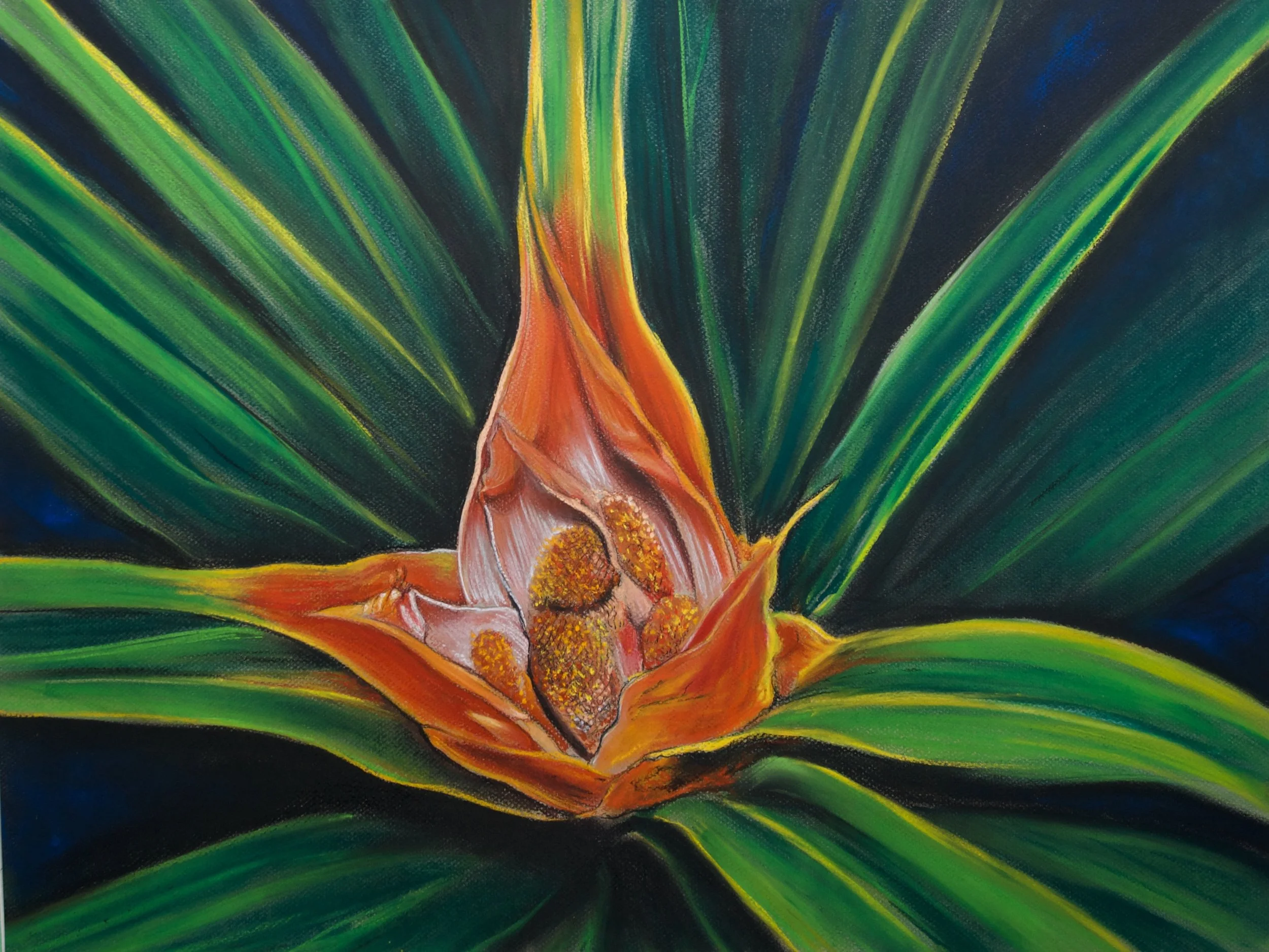
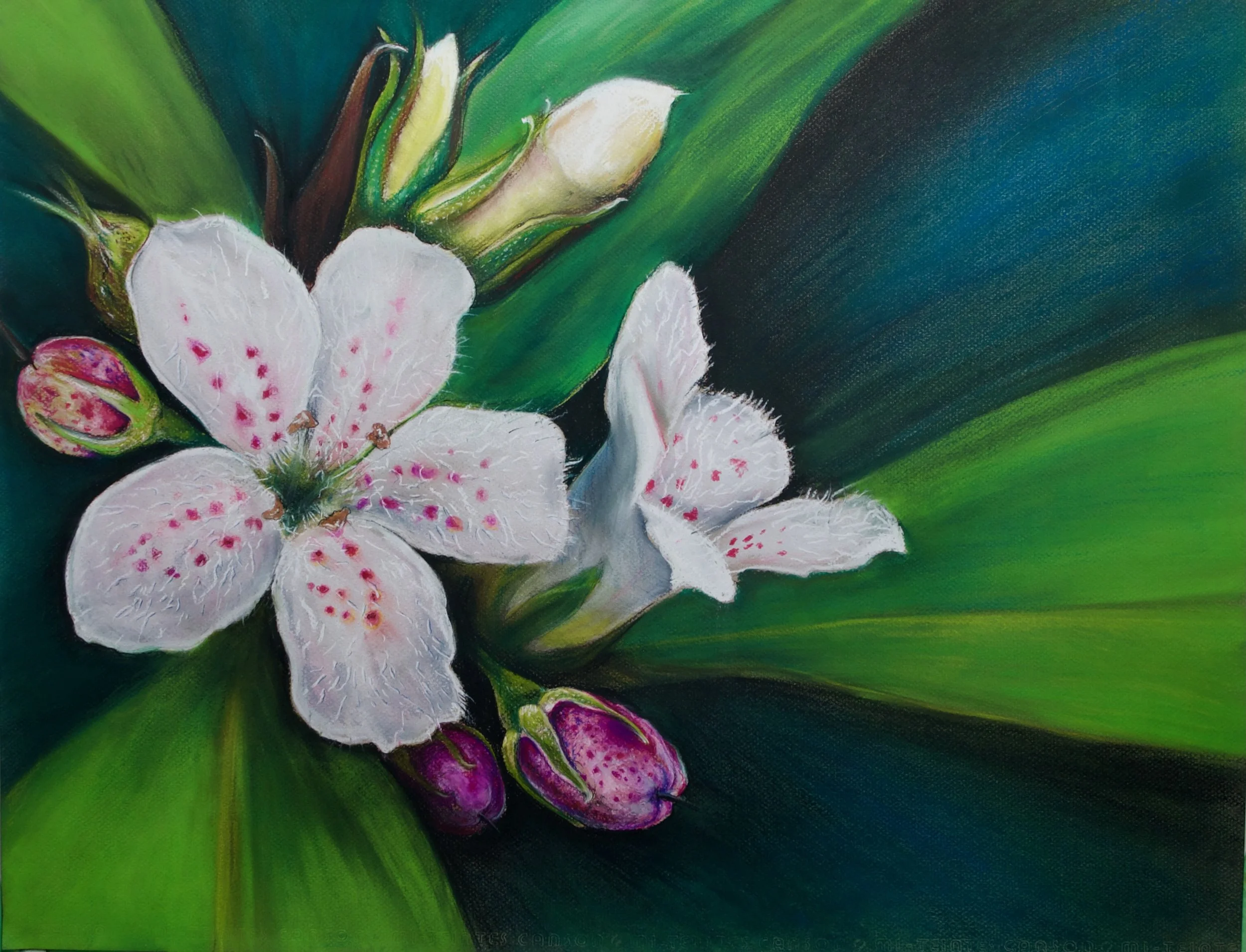
L to R: The flowers from our endemic Phillip Island Hibiscus, Mountain Rush and Popwood were first drawn in 1792 by John Doody. He was a convicted felon, in servitude to Captain William Paterson, who assumed command of the military detachment on Norfolk in November 1791. Paterson hoped to use Doody’s paintings to illustrate what would have been the very first book celebrating Norfolk’s natural bounty. But due to Paterson’s lack of botanical expertise - and thus his credibility - his plans were nipped in the proverbial bud.
4. THE ‘DEVIL’ IN THE DETAIL
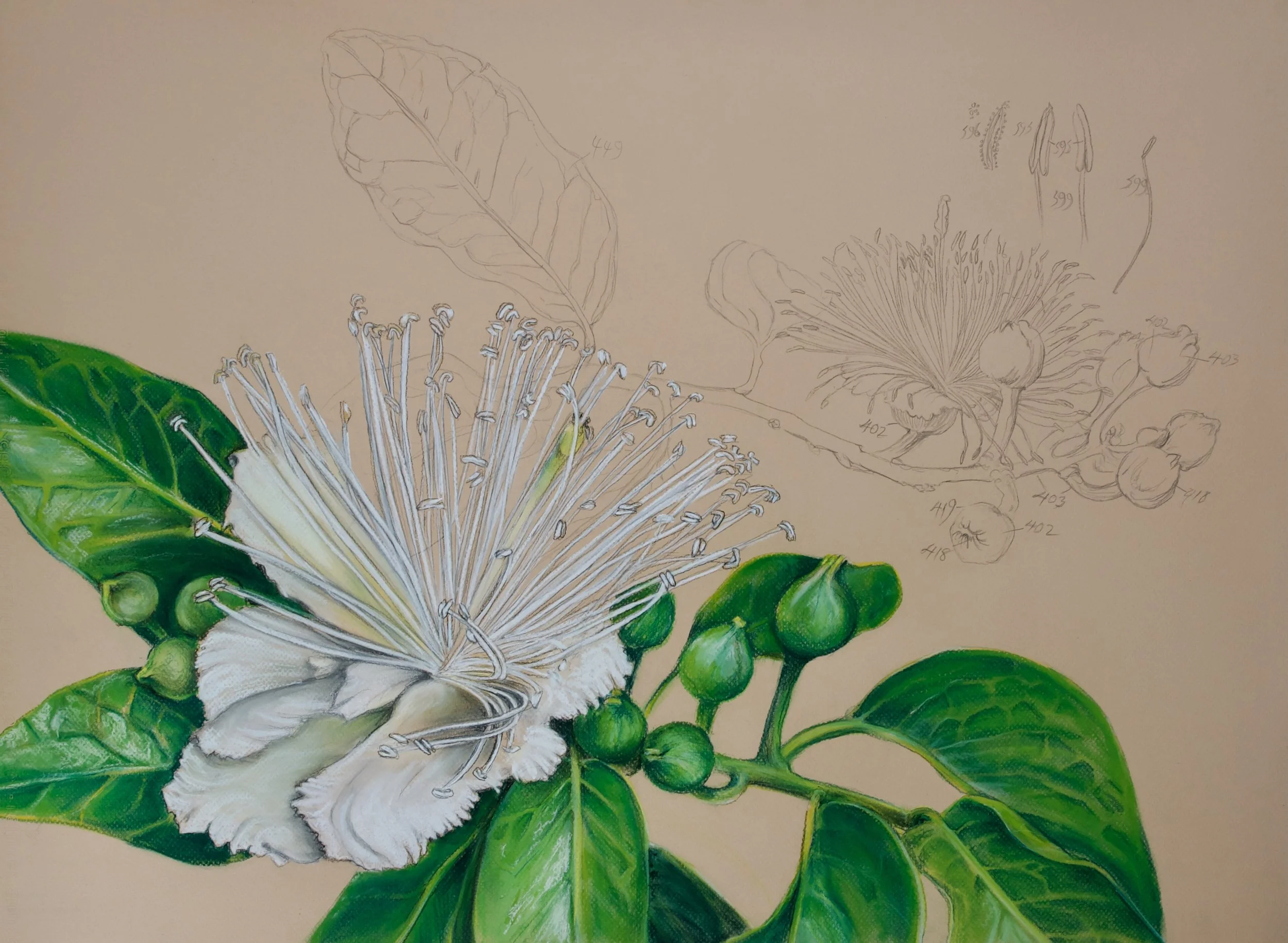
When the HMS Investigator circumnavigated Australia, Ferdinand Bauer - arguably the greatest natural history artist of all time - commanded an even greater salary than the ship's highly esteemed botanist, Robert Brown. Some suggest he may have been paid more than Captain Matthew Flinders!
On a “side trip” to Norfolk, Bauer completed a daunting portfolio of pencil sketches of our flora and fauna, meticulously recording the colours of each specimen using a unique code of 999 numbers and symbols. This illustration appropriates his sketch of the Devil’s Guts Vine in flower - just one of many species he collected on Norfolk that were new to science at the time.
5. HONOURING IDA McCOMISH
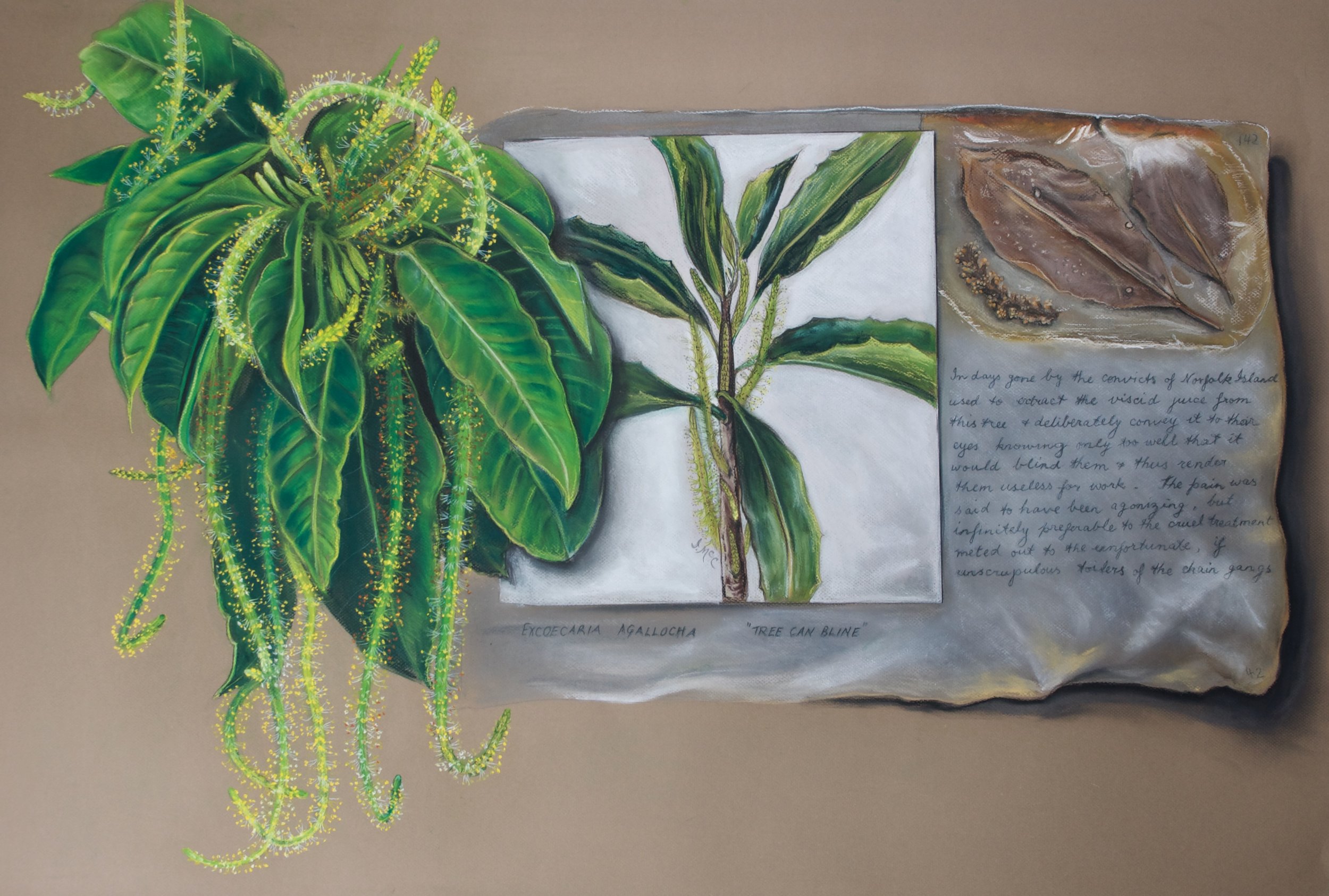
Ida McComish was a naturalist who spent time on Norfolk during the early 1920s. Together with her husband James, she collected endemic botanical specimens for several well-known Herbariums and Natural History Museums overseas. In 1928 she produced her first hand-made album, showcasing the unique flora and fungi of Norfolk. This drawing appropriates a page from that album (which features a female specimen of a mangrove plant, locally known as the Melky Tree) together with the male flower of the same species, which grows in coastal regions throughout the Indo-West Pacific.
6. FUNGI & LICHEN COLLECTION
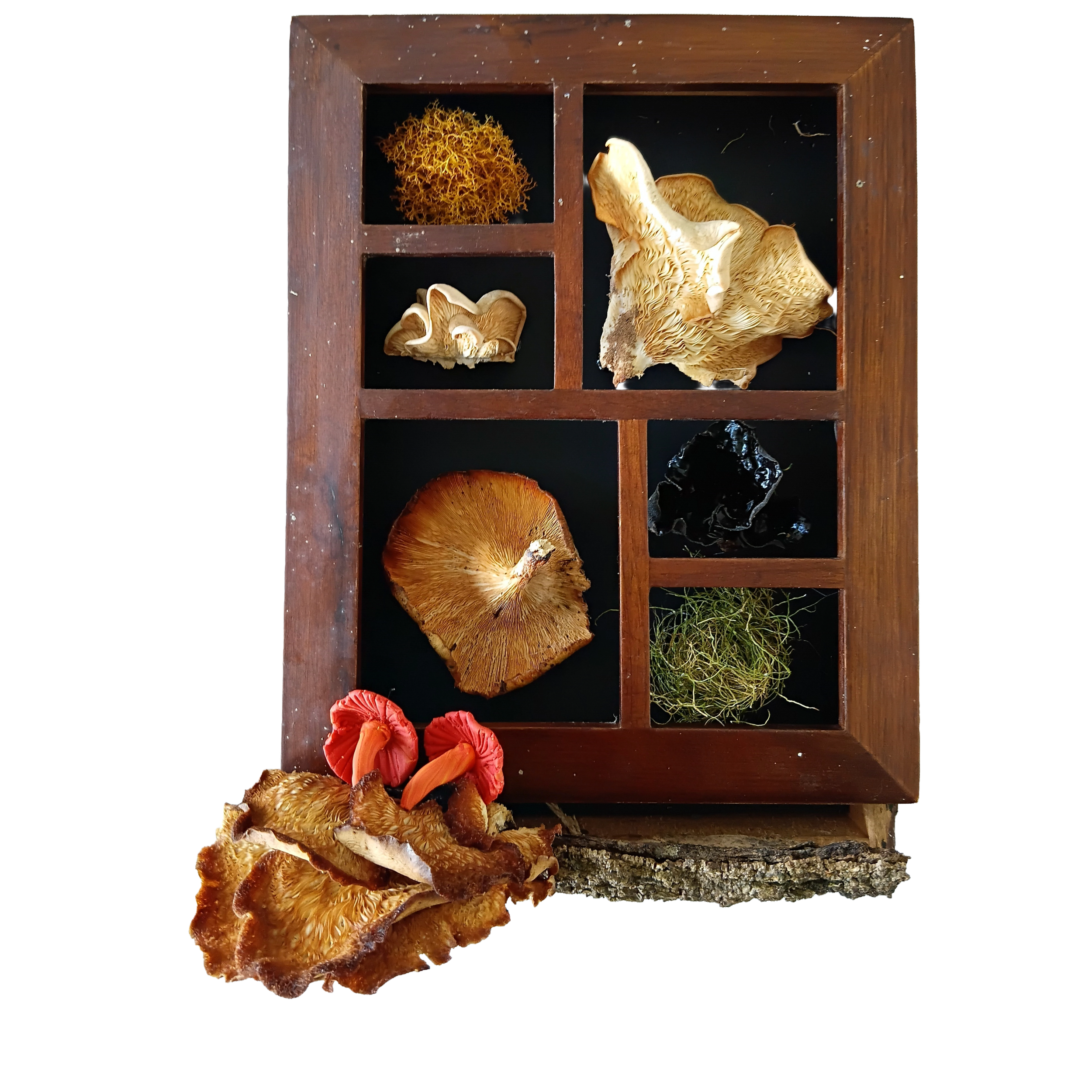
Lichens are partial to Norfolk’s clean air, and our soils are a haven for fungi - the unsung heroes of our natural world. Long overlooked by researchers, fungi are shaping up to be the new frontier for biodiversity scientists. In terms of species diversity, they are one of the most prolific groups of living things on the planet; second only to invertebrates.
7. POLLINATION & CONSERVATION
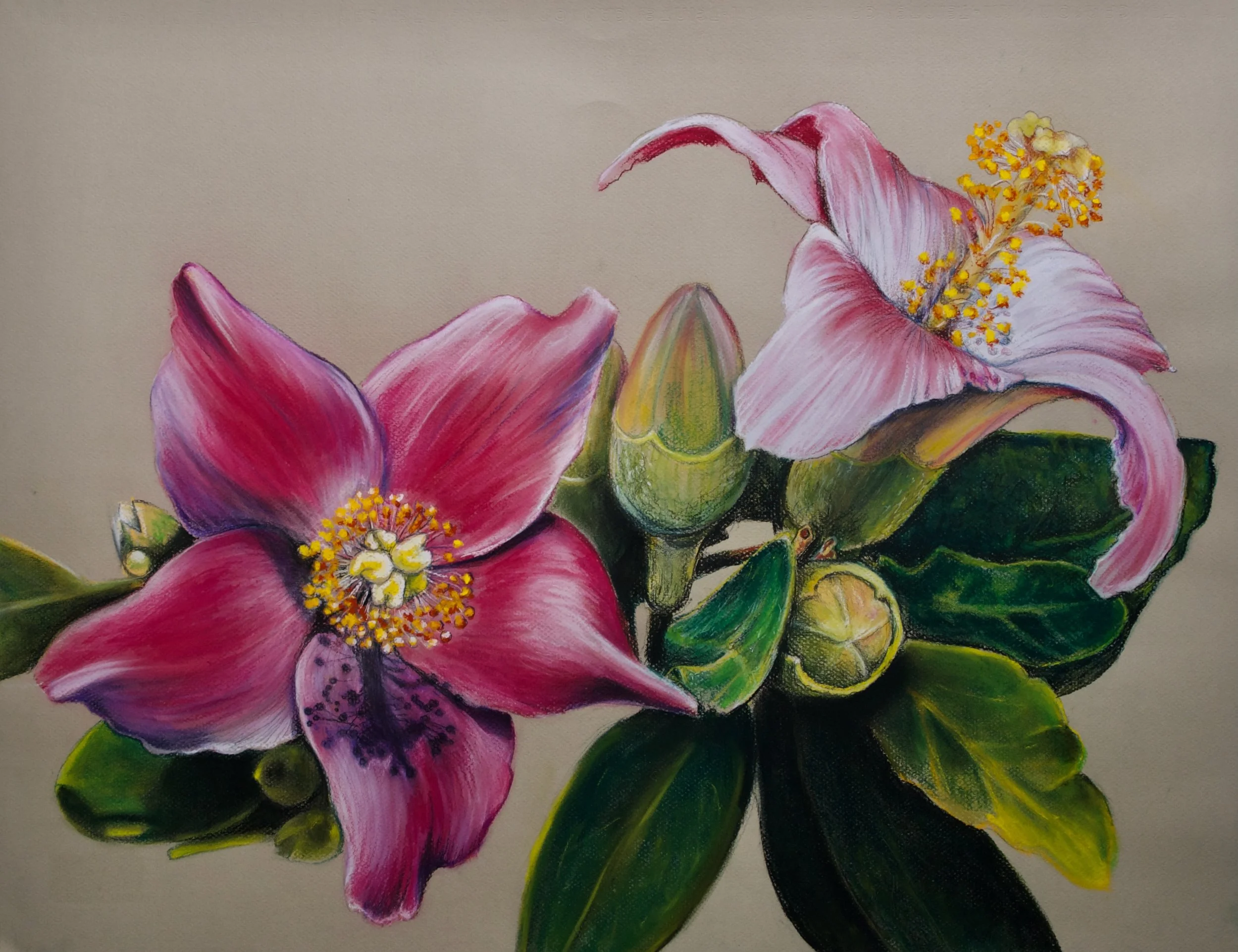
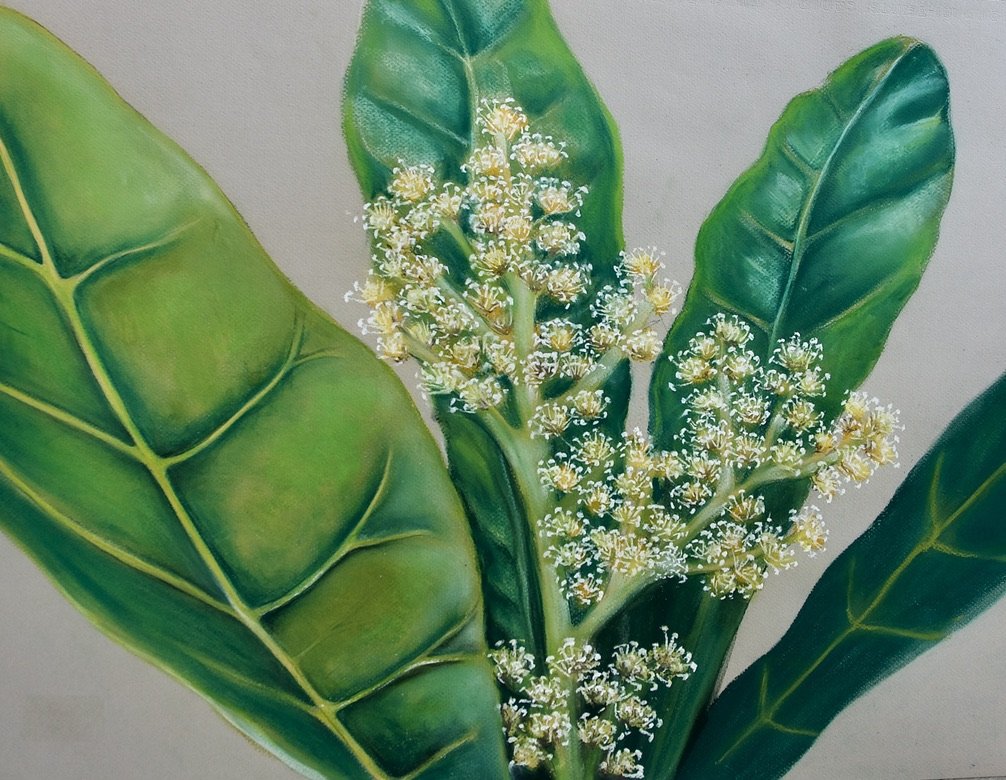
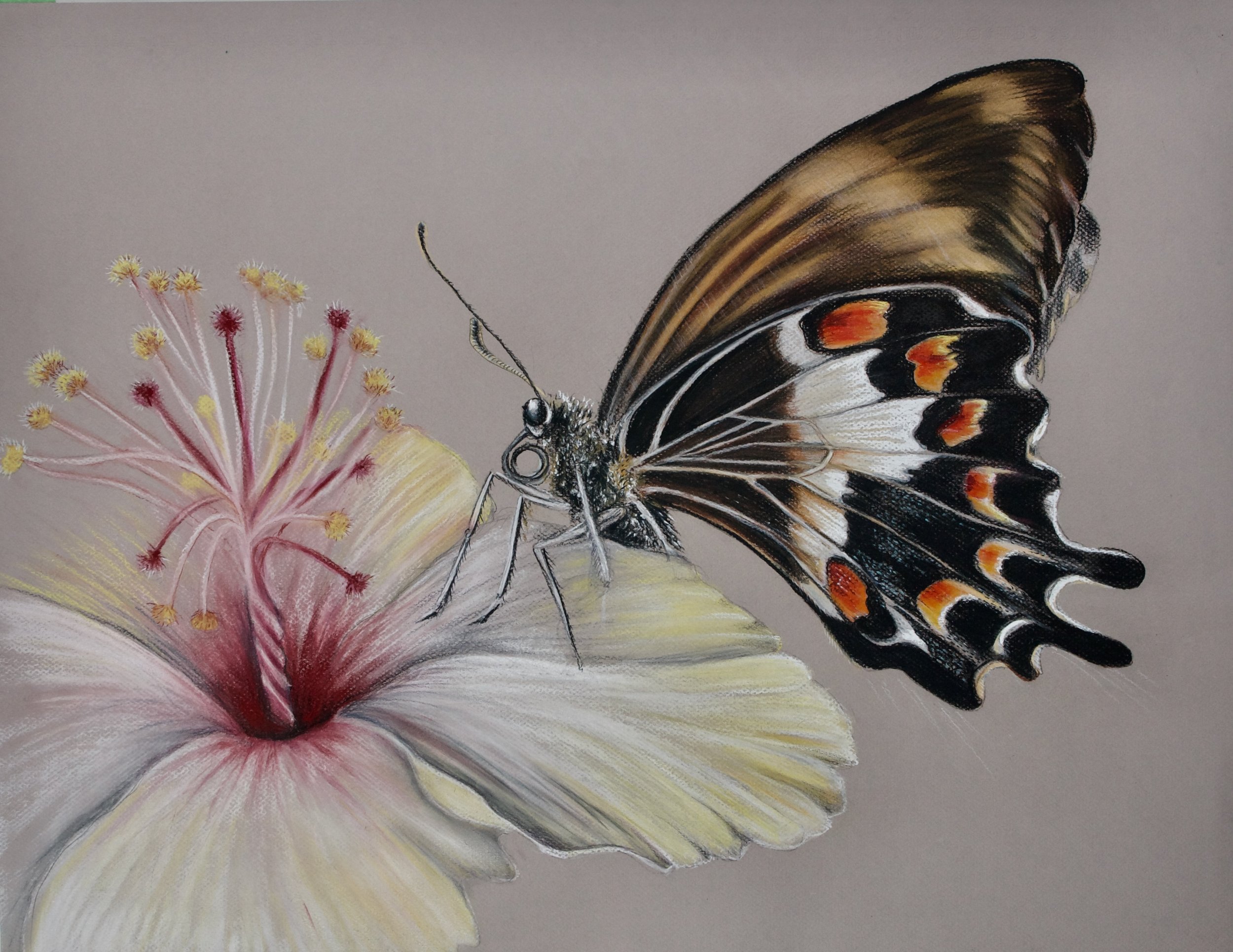
Species featured in this collection are: (L to R) the Australian Painted Lady on an Alyssum, Broad Leaf Meryta, White Oak flowers and the endemic Norfolk Island Swallowtail feeding on a Phillip Island Hibiscus.
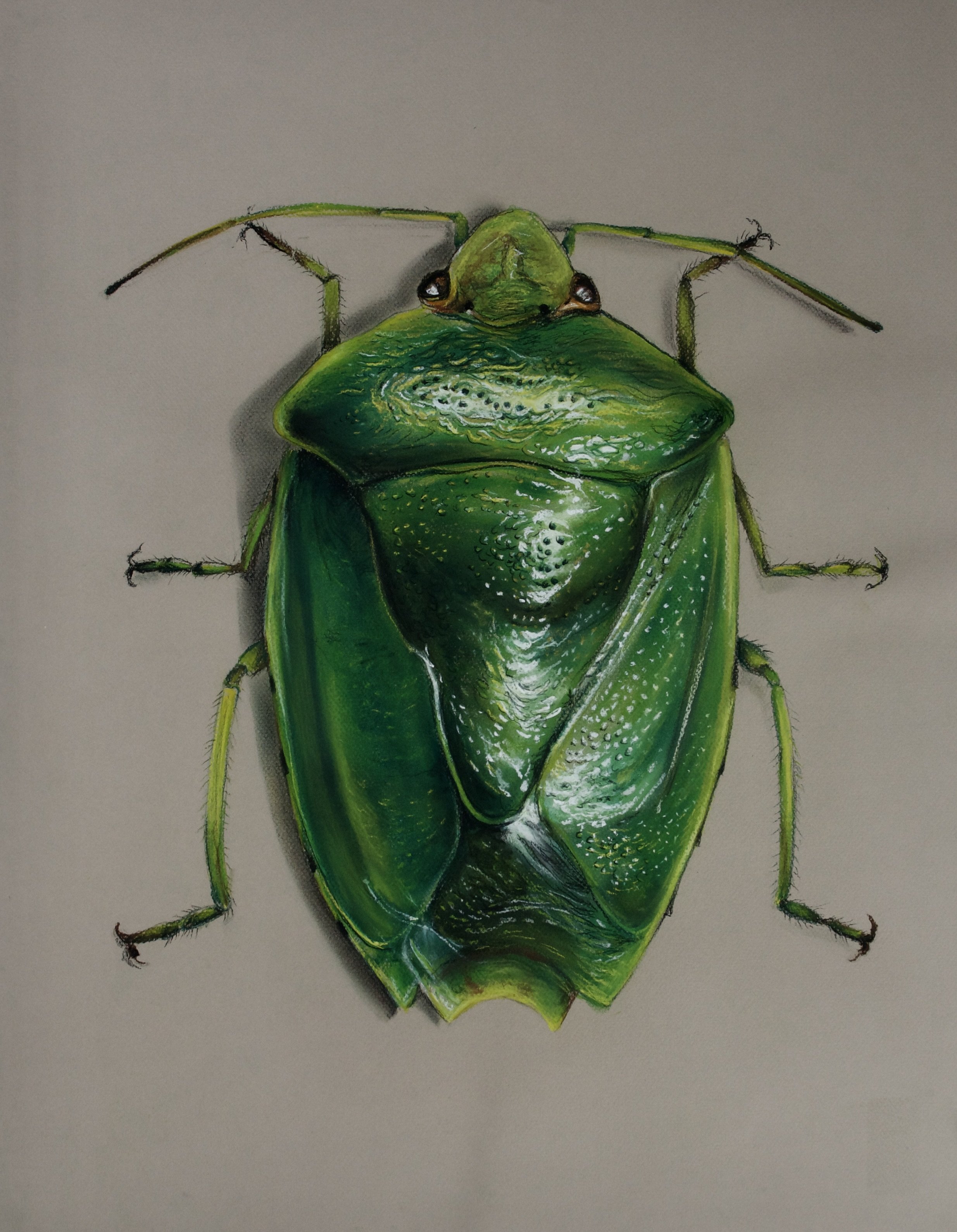
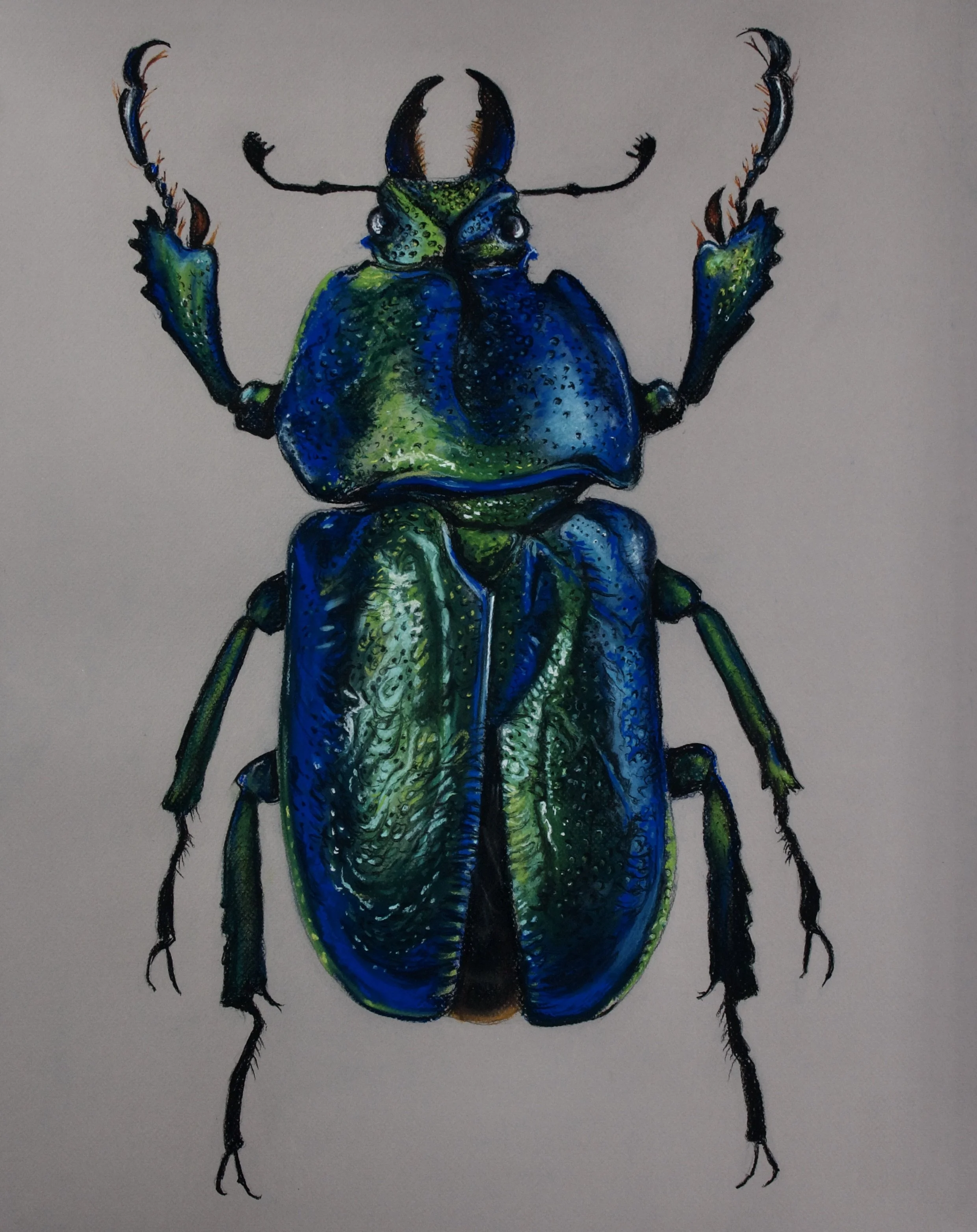
The case beneath these drawings contain Dr Robert Varman’s collection of shells, including many belonging to Norfolk’s endemic land snails, and several first and second edition books by Charles Darwin. On either side, a common Shield Bug and our endemic Stag Beetle.
Butterflies do an amazing job, pollinating our precious plants. And while most of the flora featured in this gallery is doing well, the Broad-Leafed Meryta (second from left) owes its continued presence in our landscape to human intervention. A survey in 1988 determined there were only 33 individual Meryta plants left on Norfolk. This dire situation motivated Norfolk Island National Park staff, local land-owners and volunteers to come together to save the species from extinction. Male and female plants (which were too isolated to reproduce naturally) were carefully monitored and pollinated by hand. The species is still on the critically endangered list, but has definitely bounced back from the brink, proving just how powerful community-based conservation action can be.
Throughout history, birds have been integral to human life. They inspire us all to soar beyond our limits; with purpose, tenacity and grace.
INSPIRATION (GALLERY B)
8. THE ART OF ORNITHOLOGY
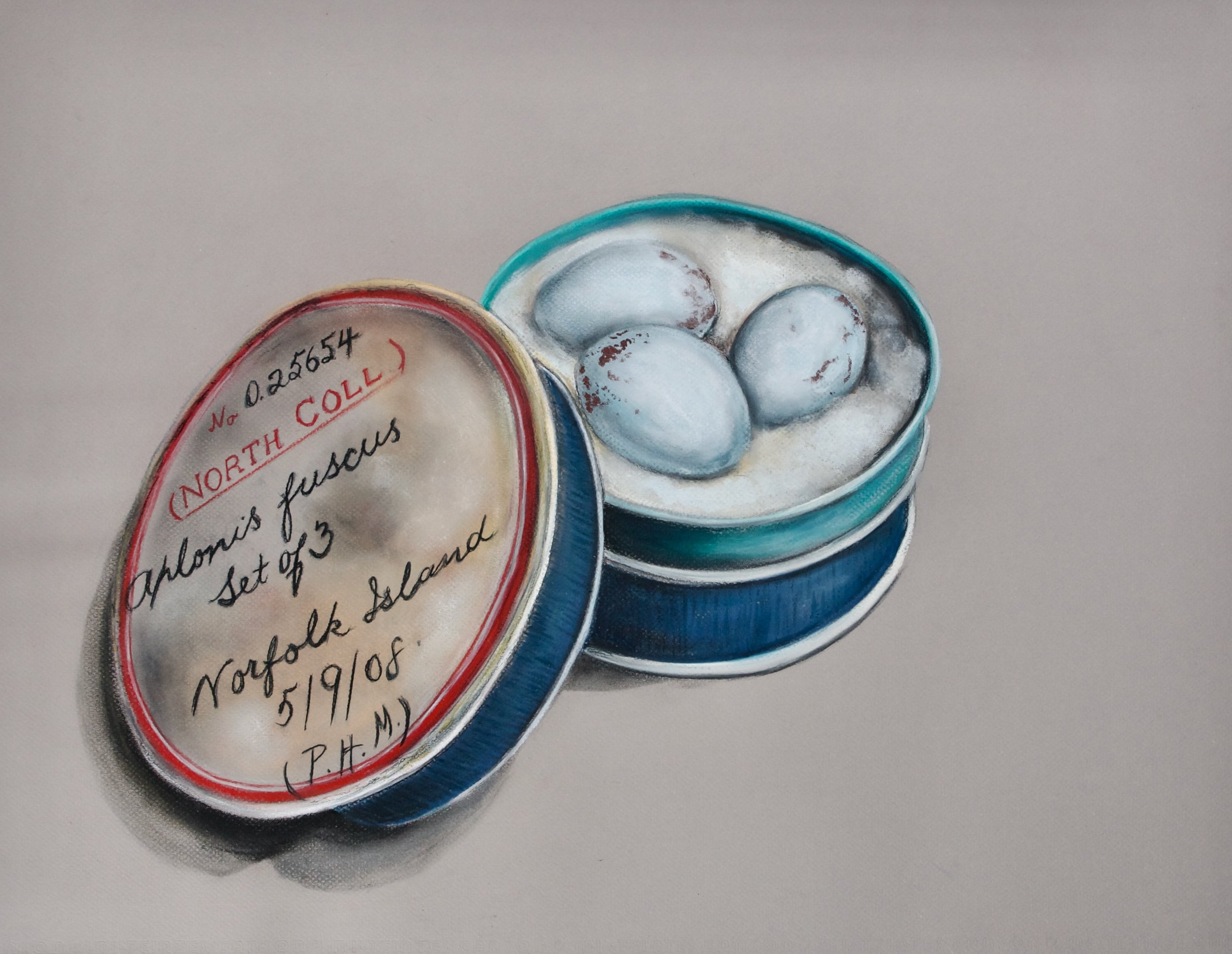
The Norfolk Island Starling eggs that feature in this illustration were collected in 1890 by Dr Peter Metcalfe, Norfolk's longest serving Chief Medical Officer. He was also a passionate naturalist who studied our flora and fauna in his spare time, regularly sending specimens to a number of herbariums and museums. Sadly, this species was last seen alive in 1923.
9. FOREST BIRDS
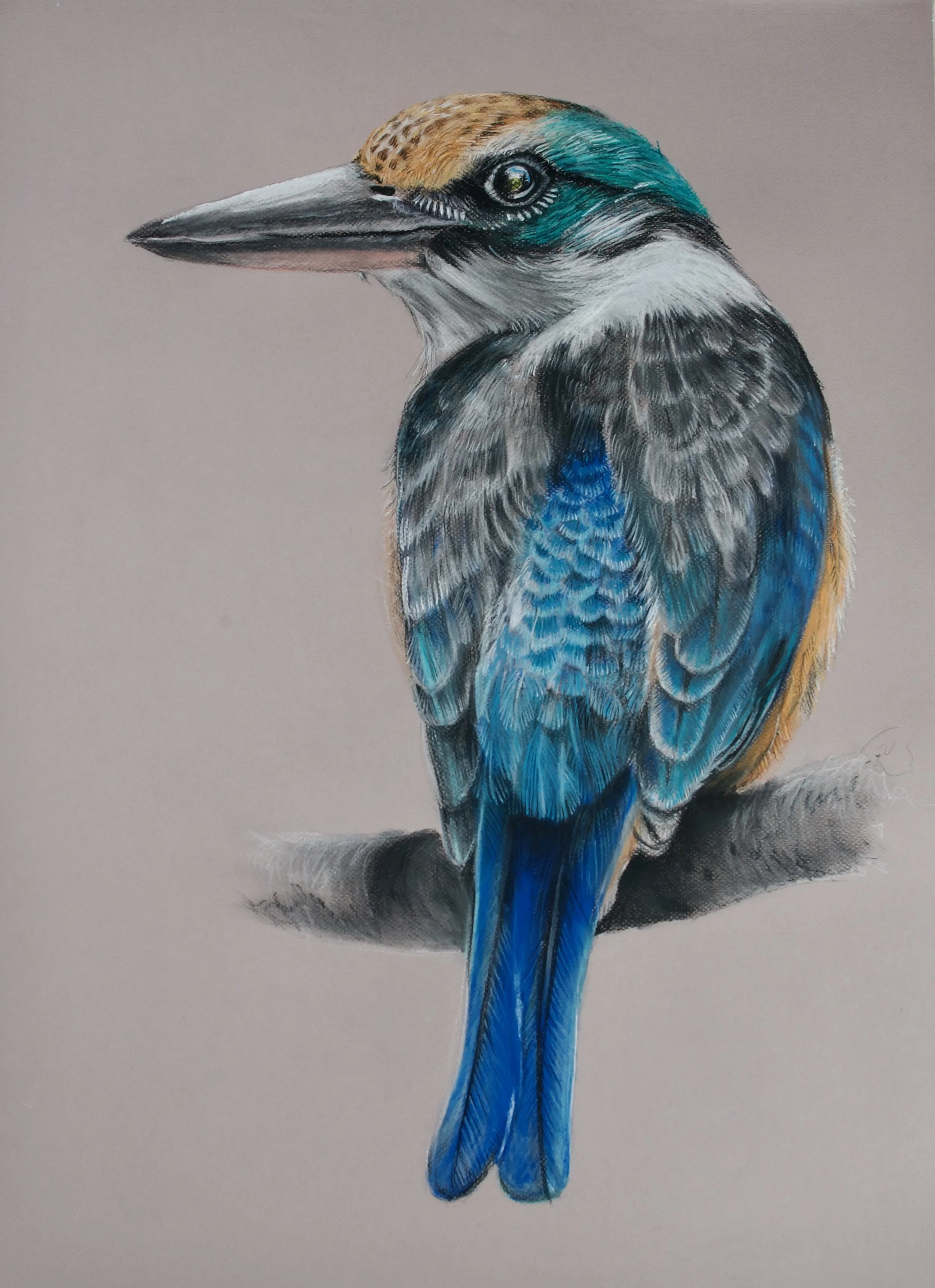
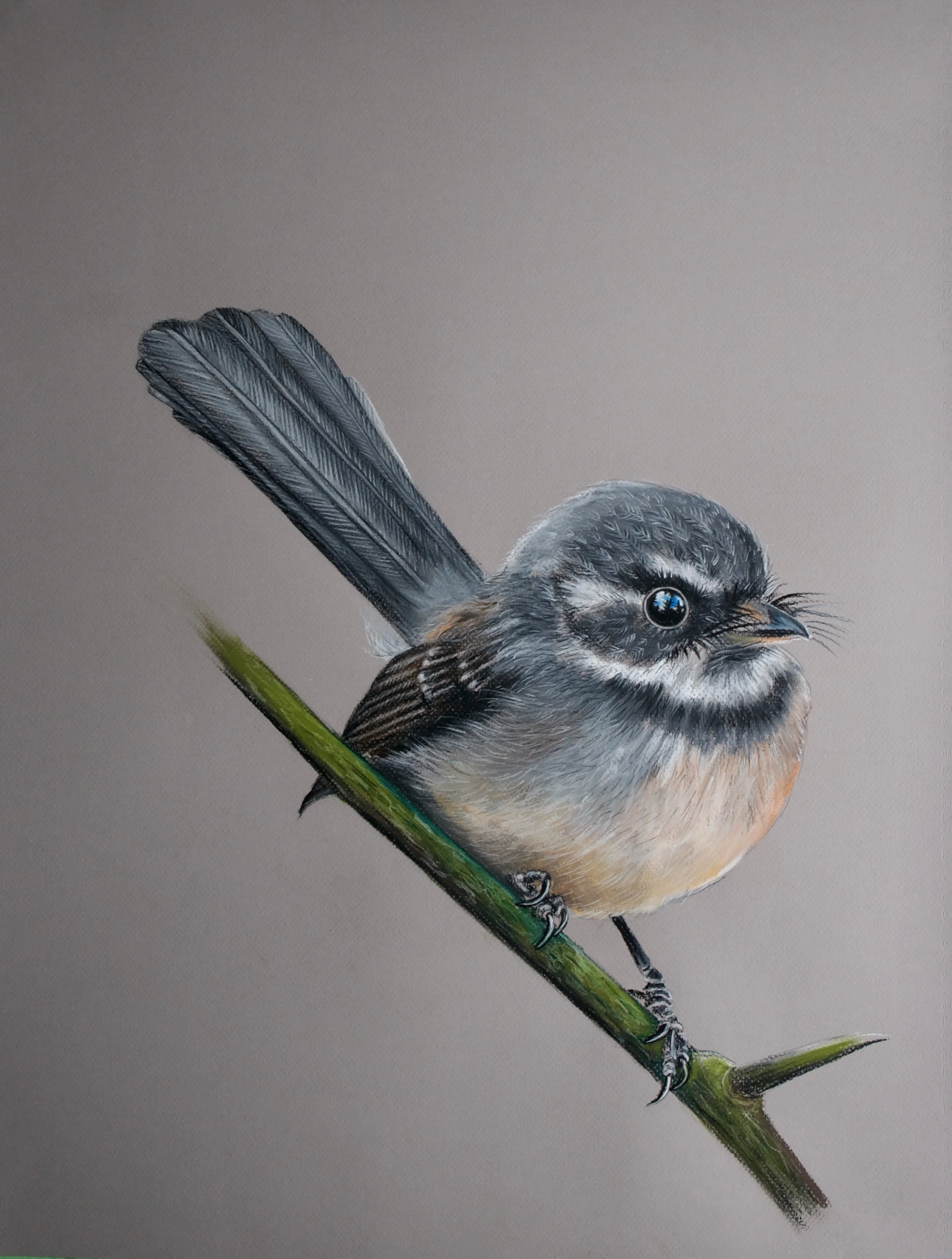
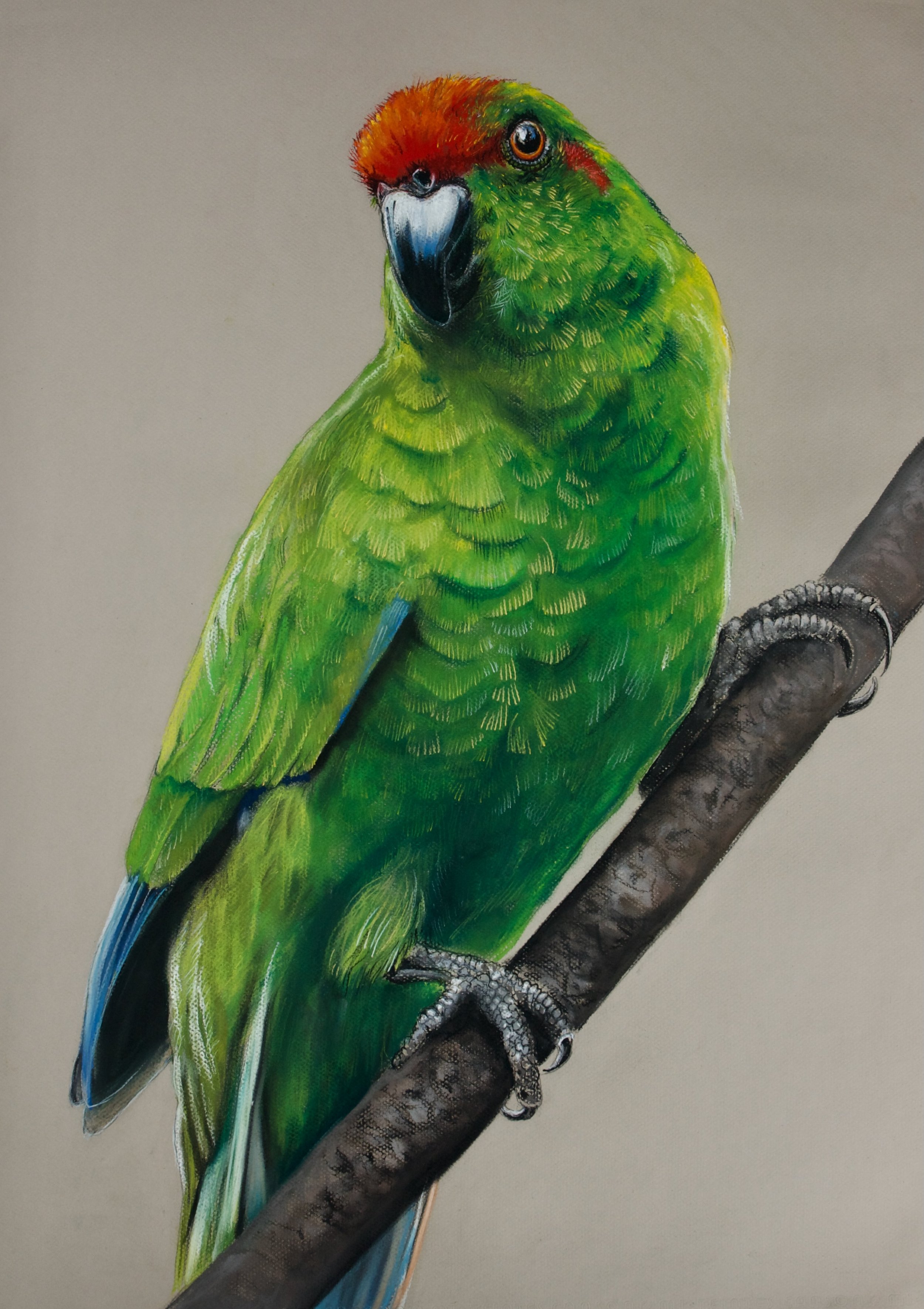
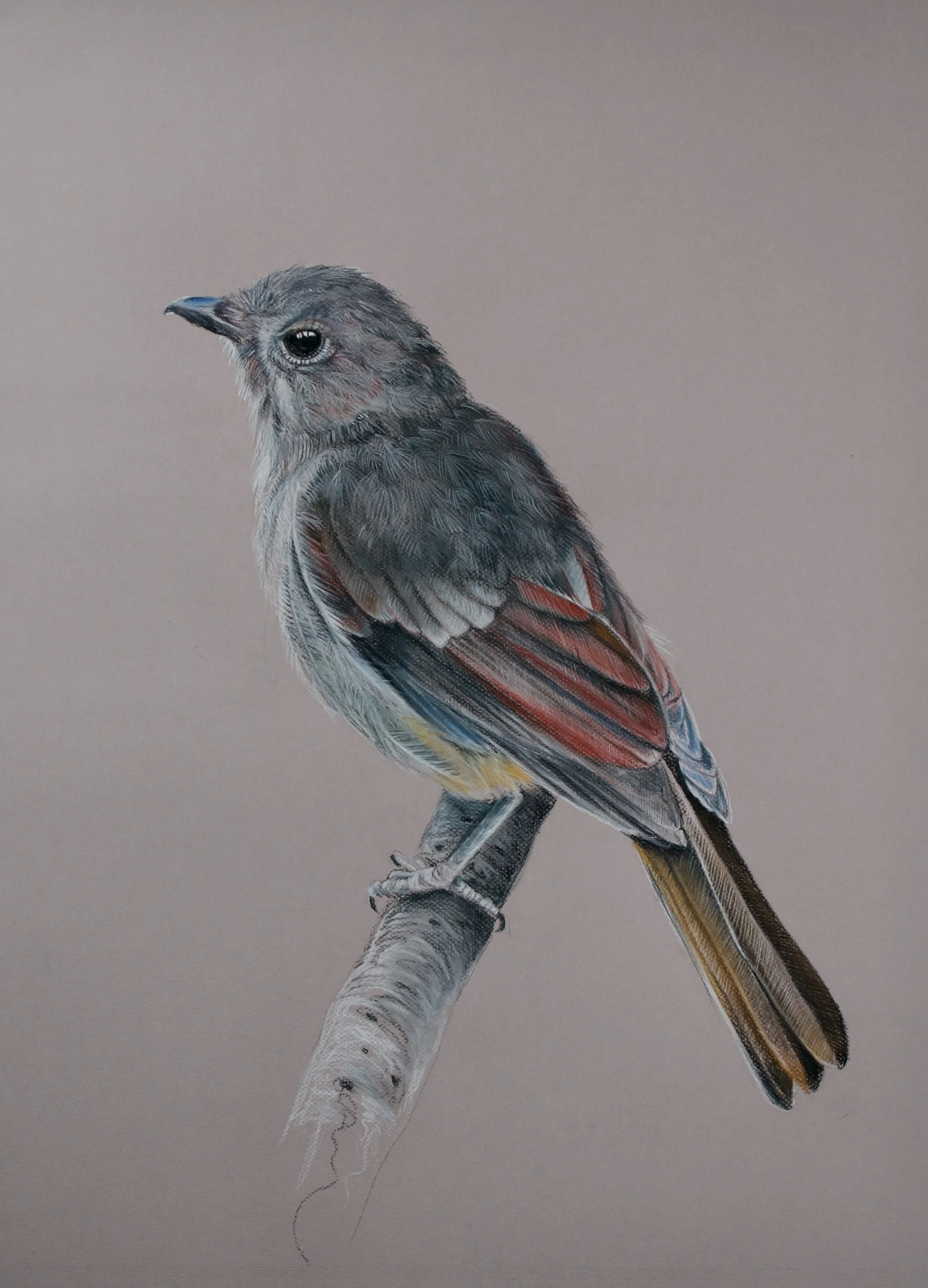
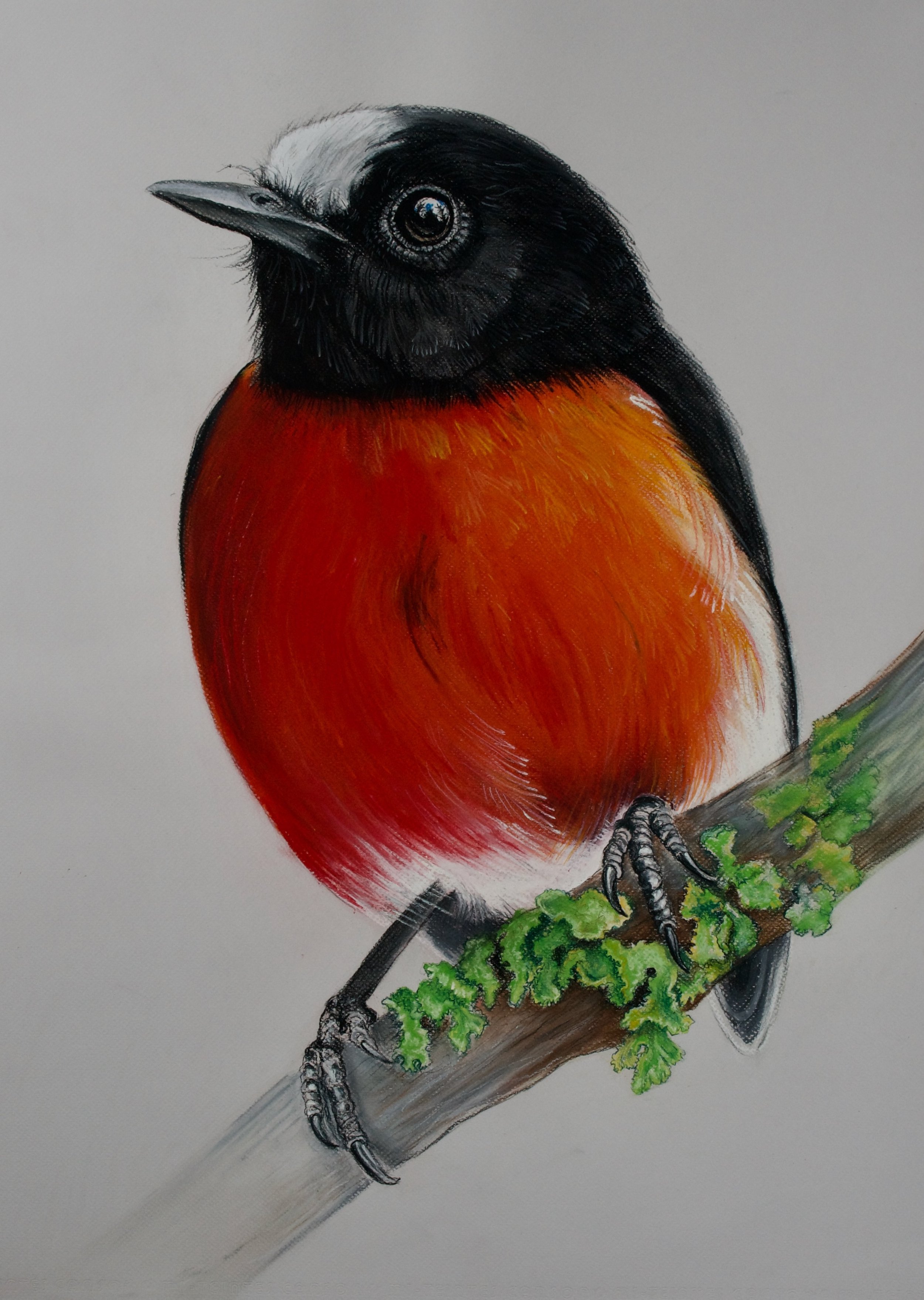
Any walk in the wild is a joy; more so when our forest birds are active and happily singing. Look out for these precious endemics (L to R): our Grey-headed Fantail, Sacred Kingfisher (Nuffka) Green Parakeet, Robin and Golden Whistler (Tiemi). Together with our Gerygone and Long-billed White-eye, they are the only endemic birds left from the 15 that were present on Norfolk when the colonists arrived.
10. THE WONDER OF NESTS
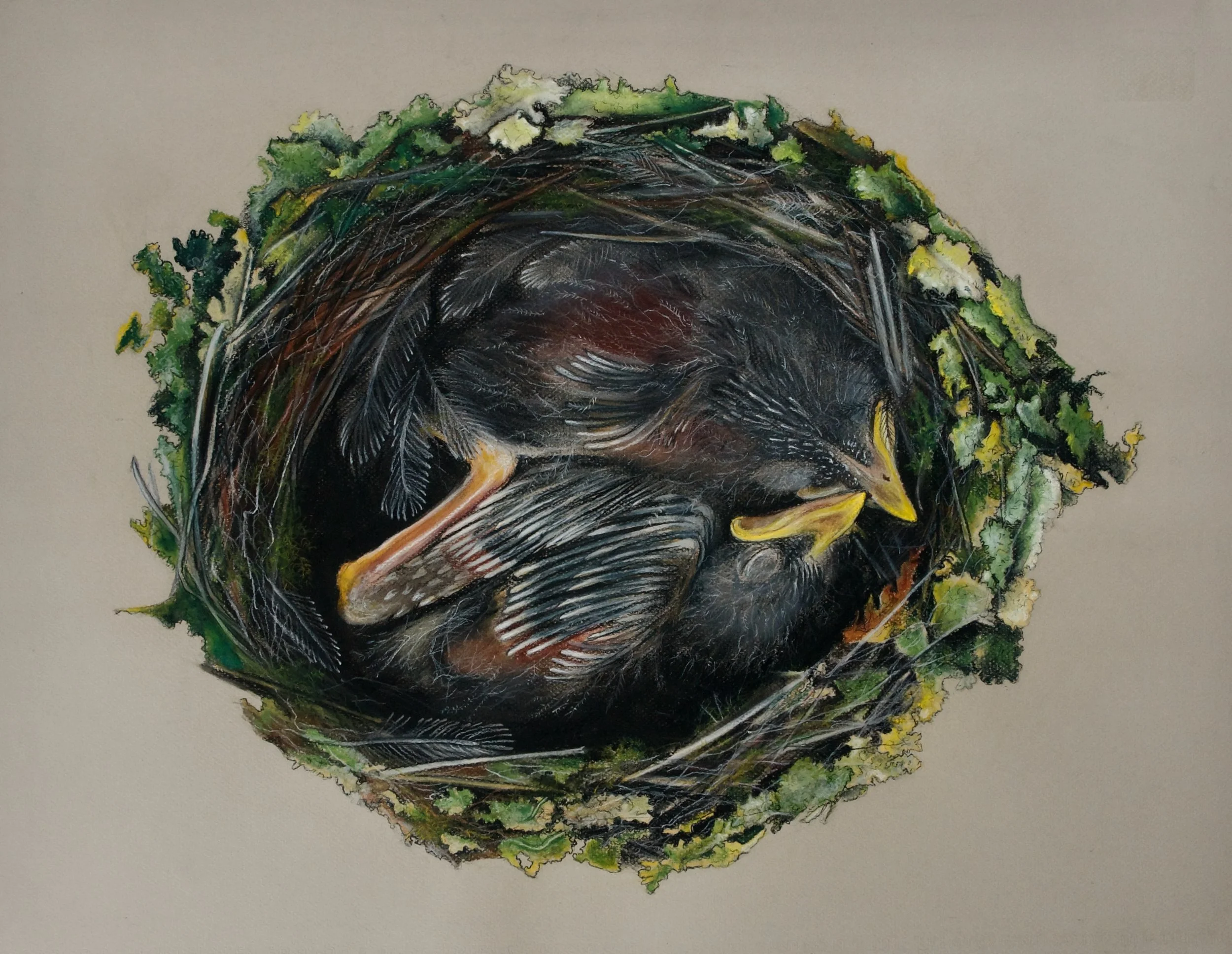
Birds’ nests - which in the wild seem so fragile and transitory - can last for centuries in museum collections. A remarkable testament to their architectural integrity. They are time capsules in a sense; providing ornithologists with an environmental snapshot of the sorts of plants - and indeed animals - that would have been around when the nests were constructed. This robin’s nest was held together with fine spider webs and lined with down from feral chickens.
11. NATIVE & INTRODUCED SPECIES
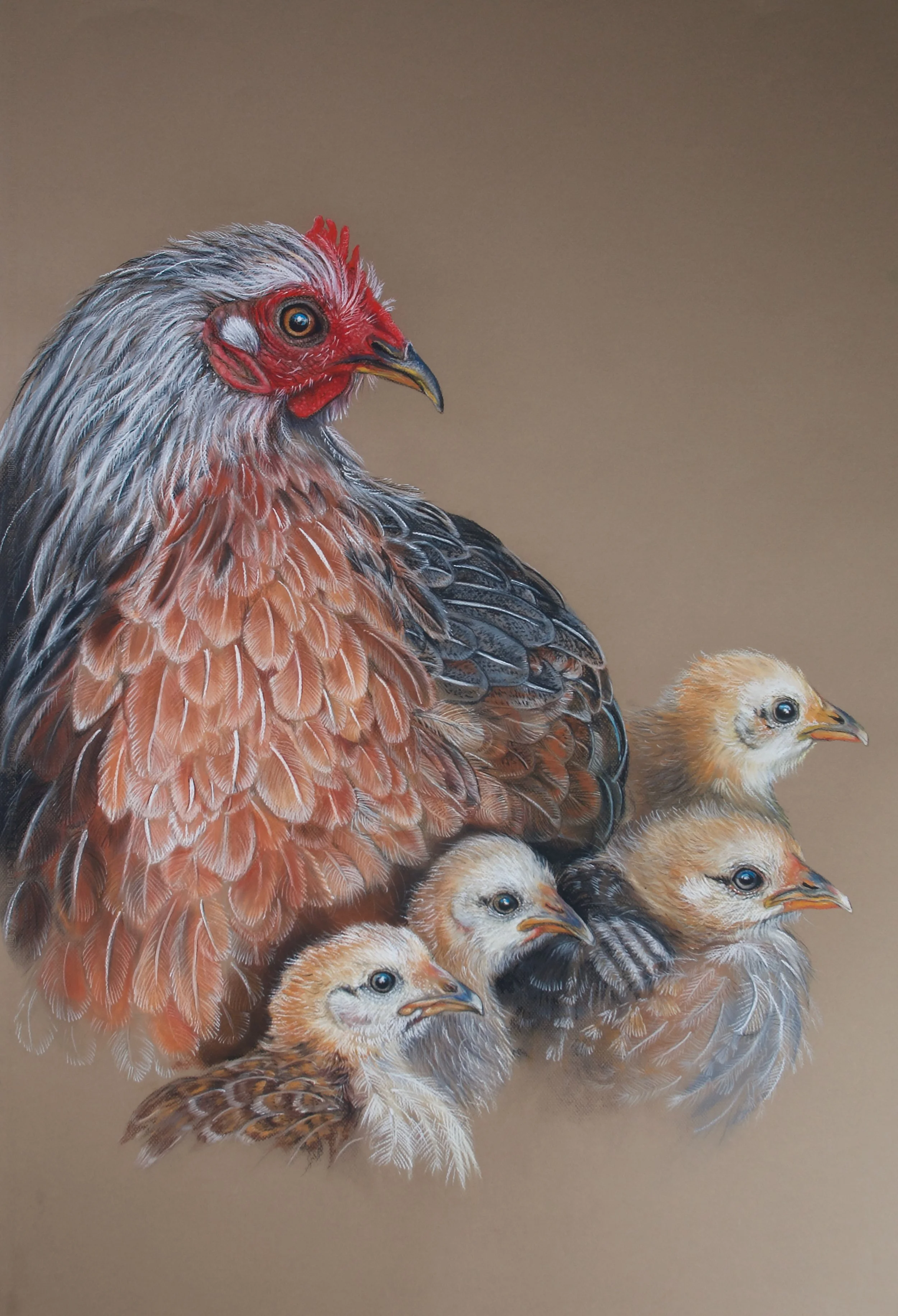
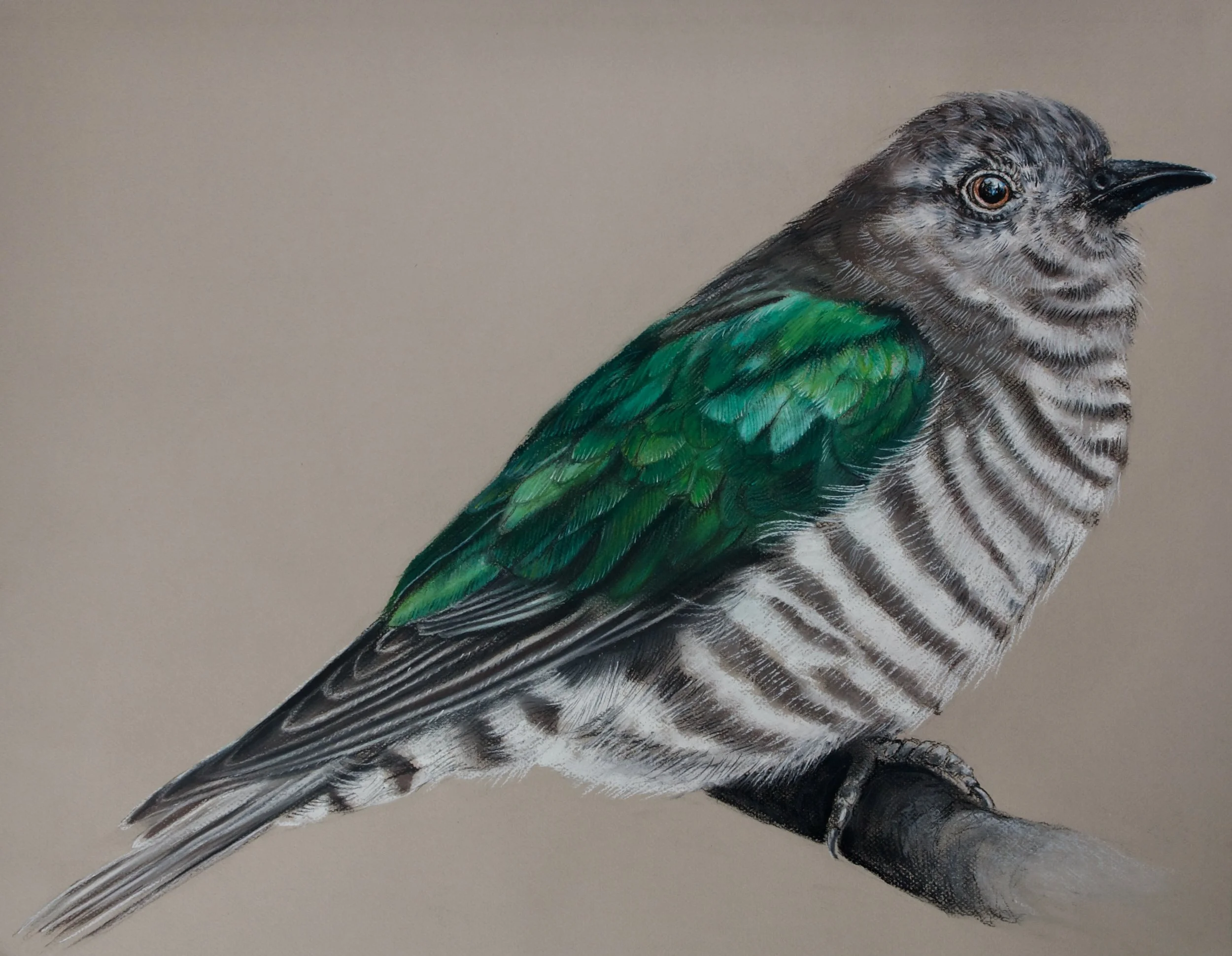
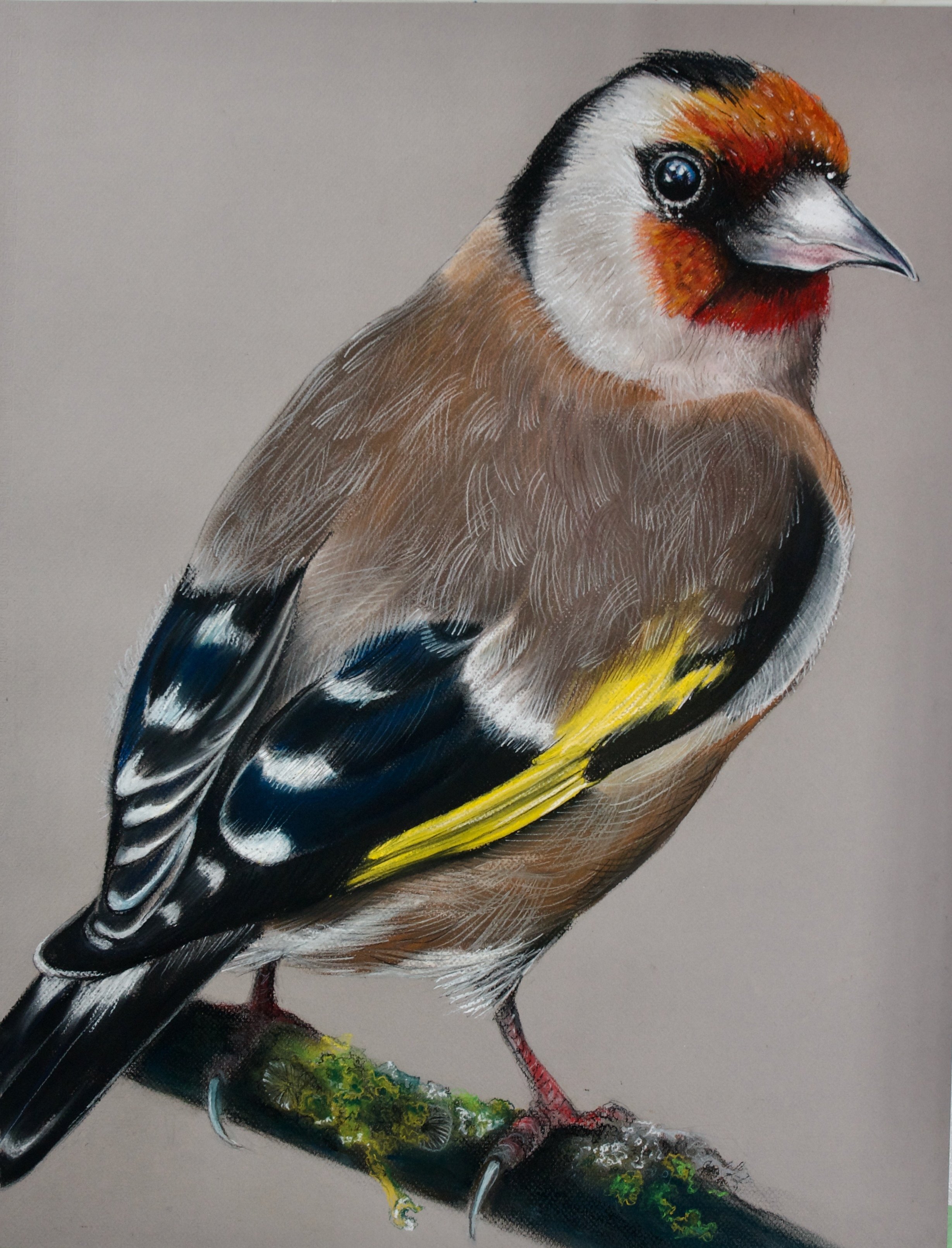
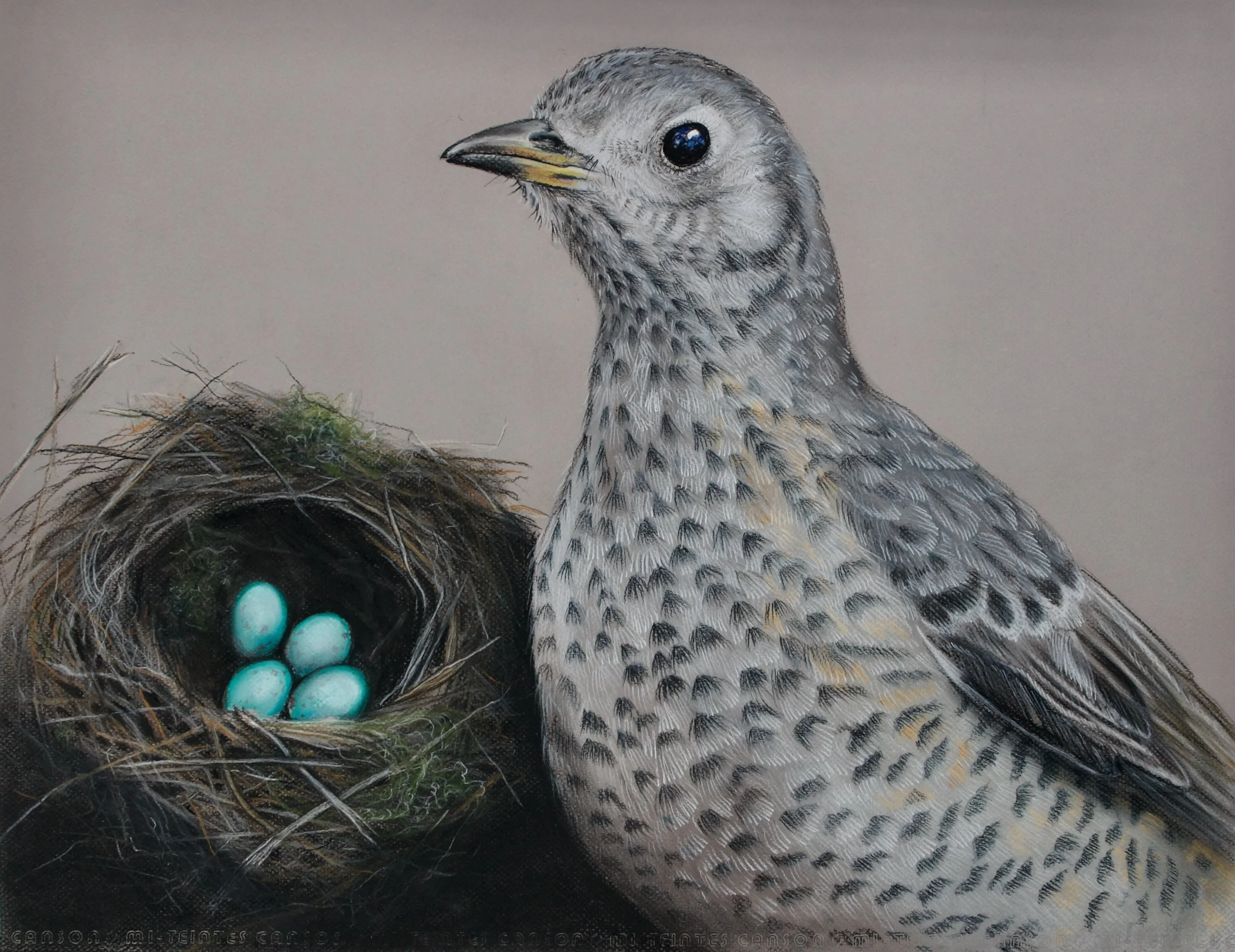
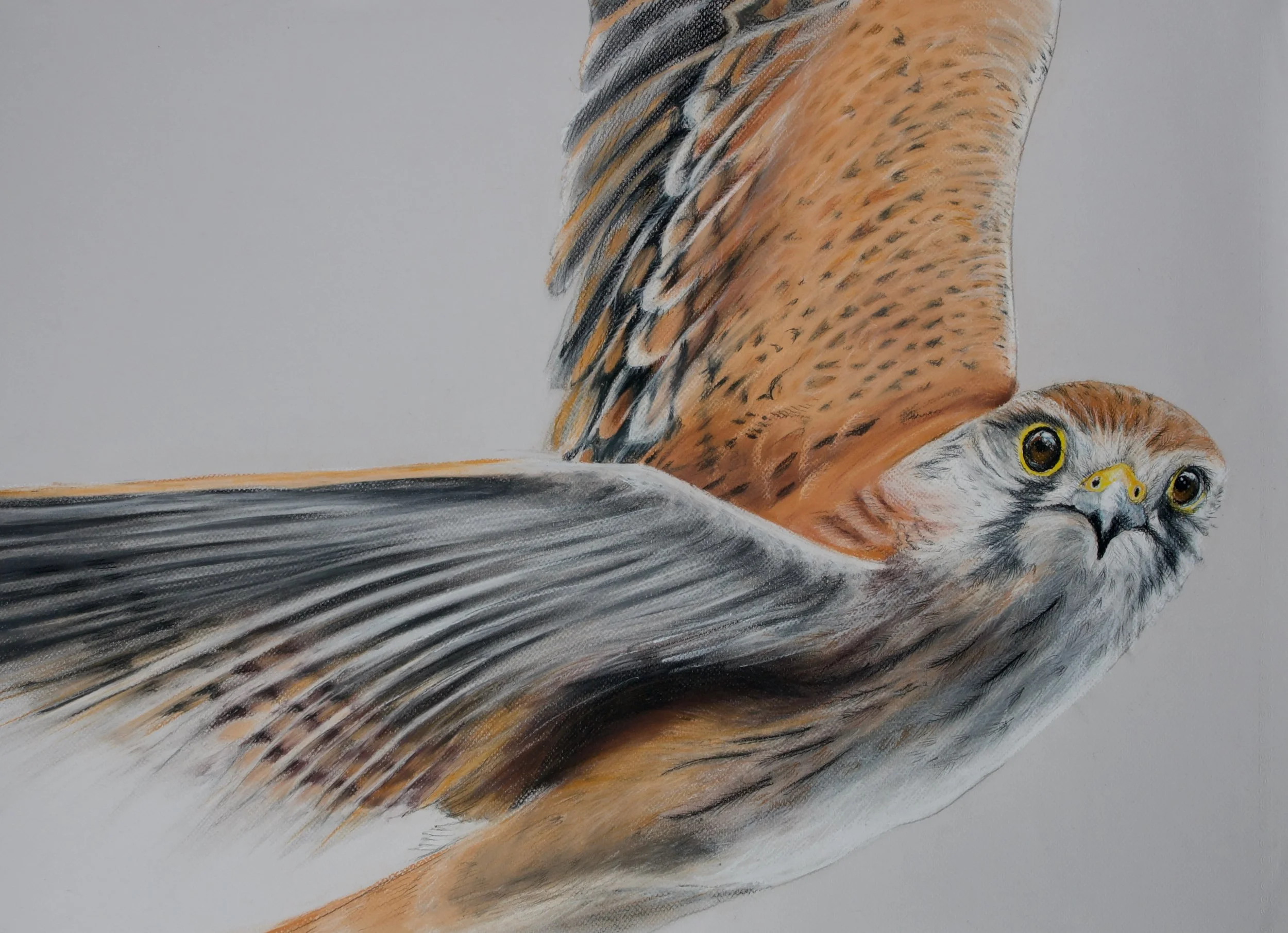
Quite a number of charismatic birds have made a home for themselves here on Norfolk. These include (from L to R) Feral Fowl, the European Goldfinch, Shining Bronze-Cuckoo, Song Thrush and Nankeen Kestrel.
Nankeen Kestrels have perfected the art of wind-hovering; the only bird of prey capable of effecting this tricky manoeuvre. The stronger the breeze, the less they need to flap. They stay stationary by simply gliding into the wind; a technique aptly called ‘kiting’.
Look closely at the ingenuity and diversity that surrounds us in the natural world. Marvel as patterns emerge - above and below the waterline.
OBSERVATION (GALLERY C)
12. MIGRATORY BIRDS
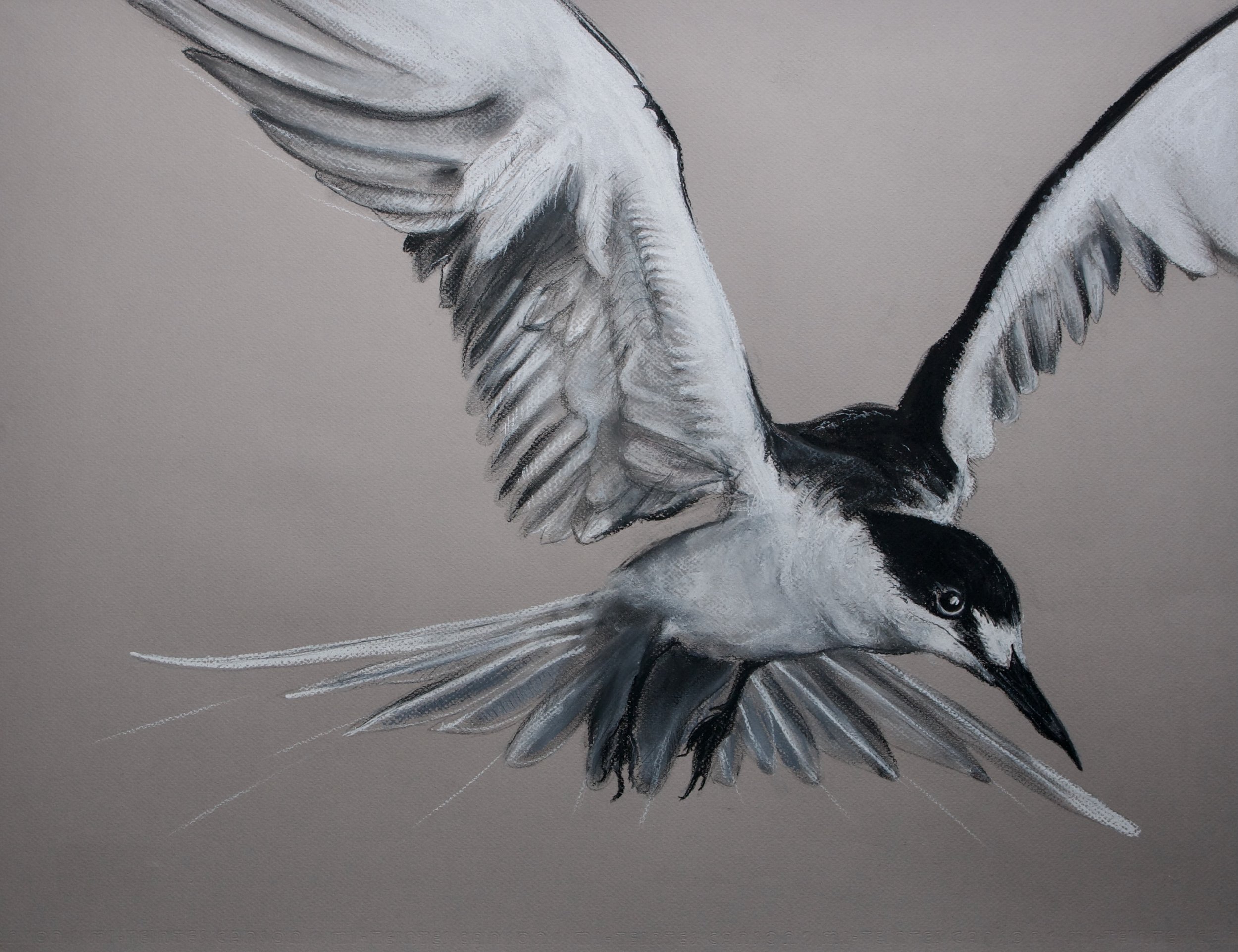
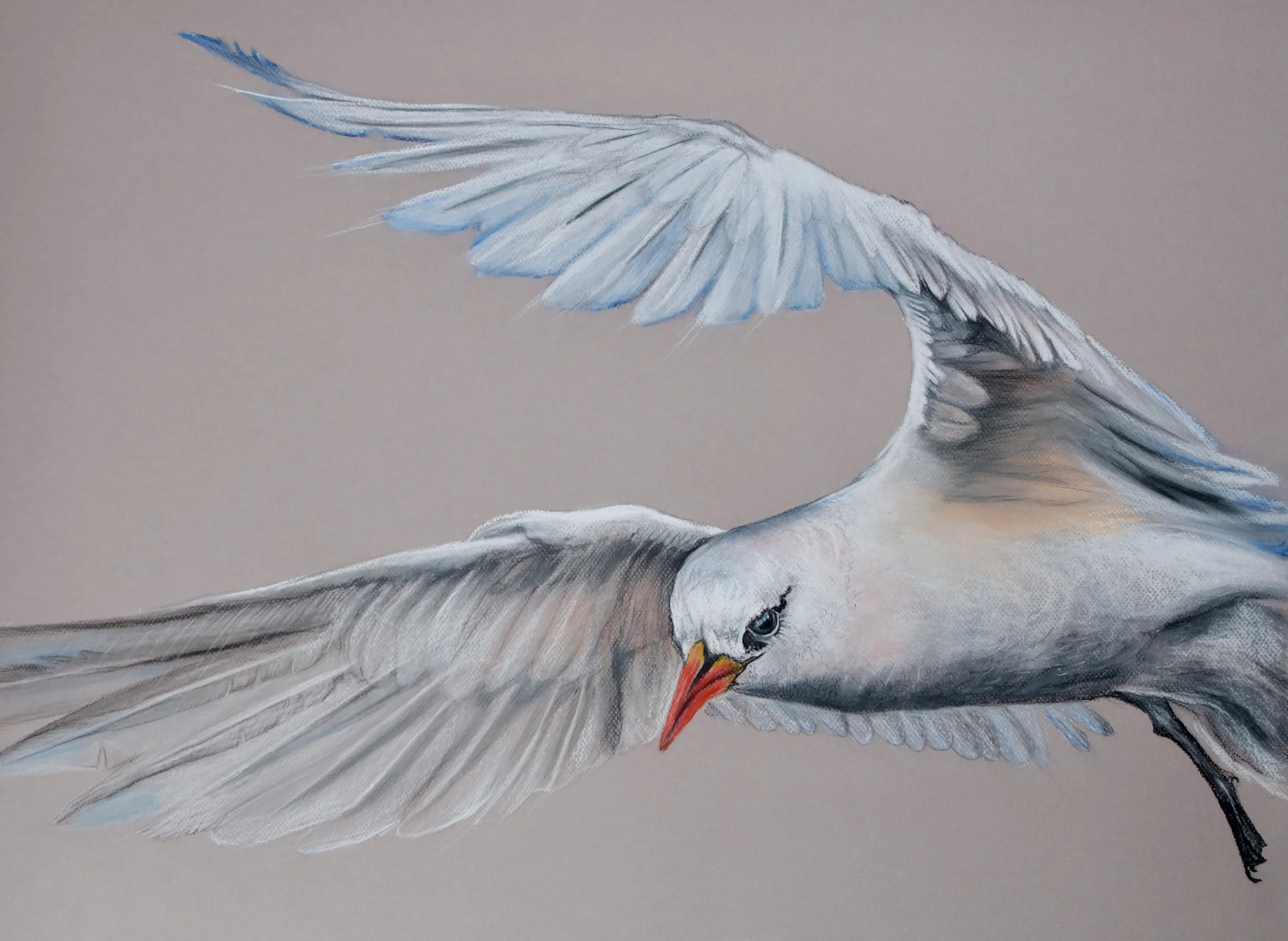
Every year Norfolk Islanders welcome the return of a number of migratory birds - including (L to R) the Sooty Tern (Wielberd) Providence Petrel - which were once considered locally extinct - and Red-Tailed Tropicbird (Boesan Berd).
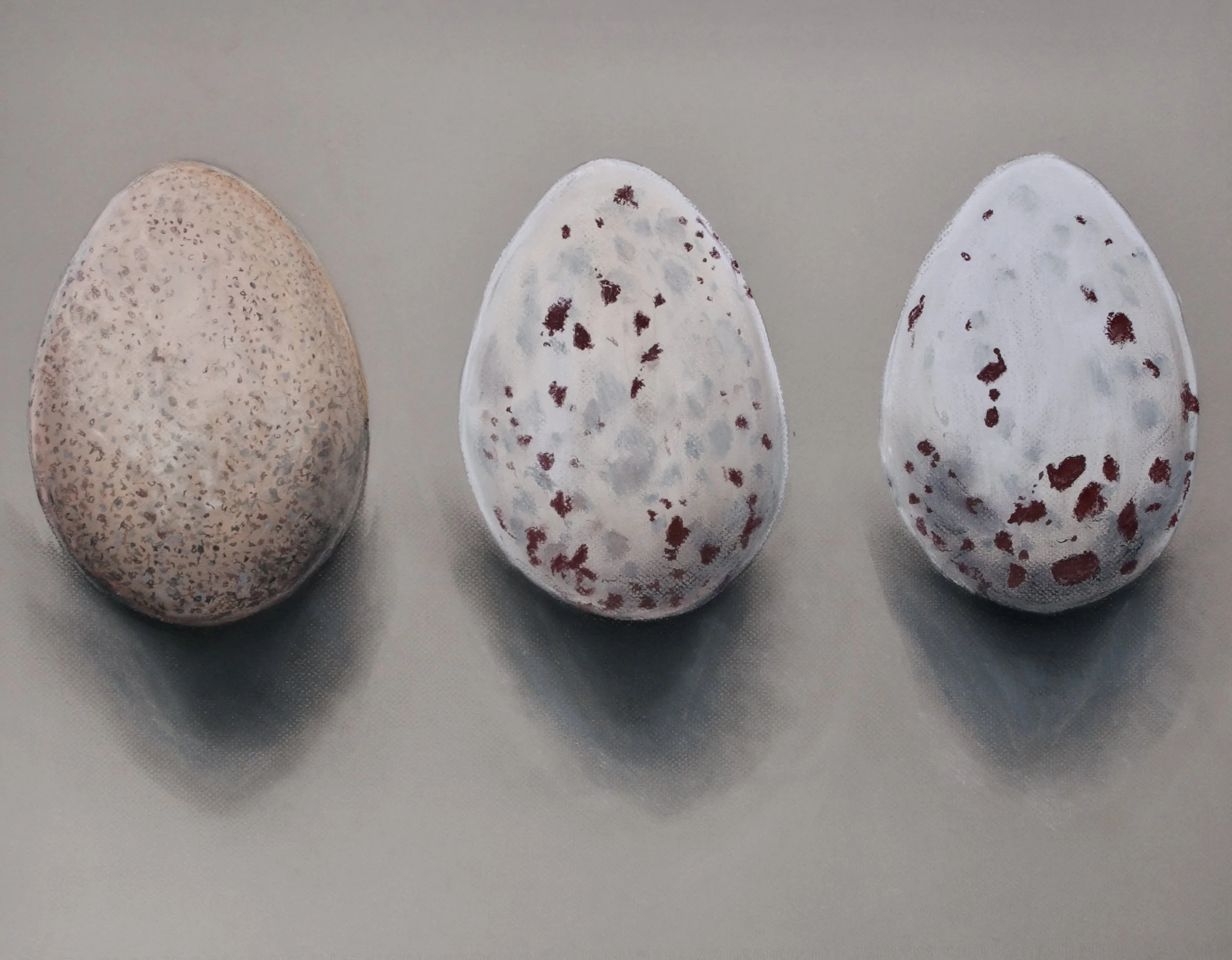
‘Wielberd’ eggs are a seasonal delicacy enjoyed by many Norfolk families. But as the species continues to endure increasing pressure from starlings and other winged predators, the Council of Elders has suggested a limit to the number of eggs Islanders may harvest.
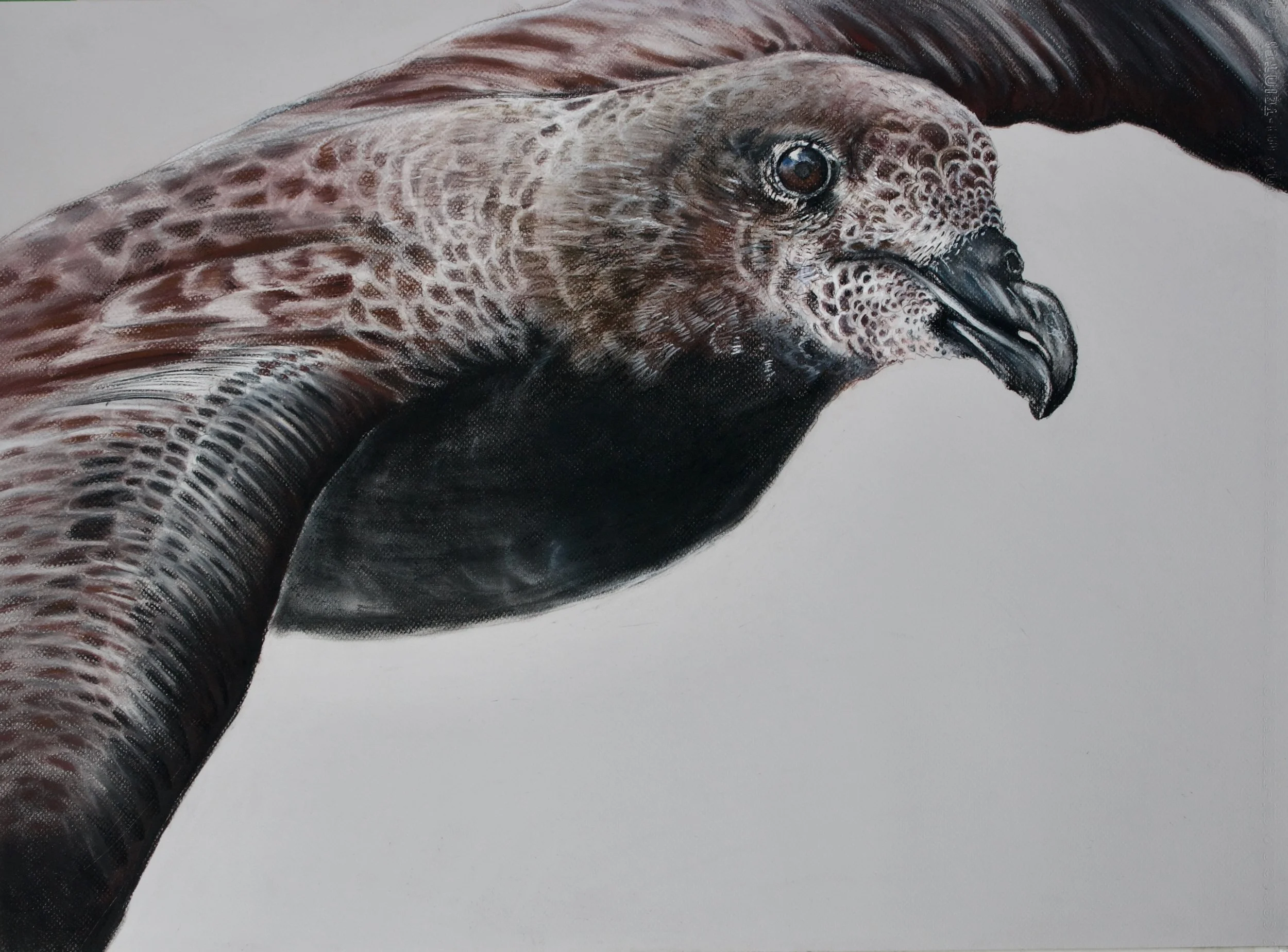
13. SEABIRD COLLECTION
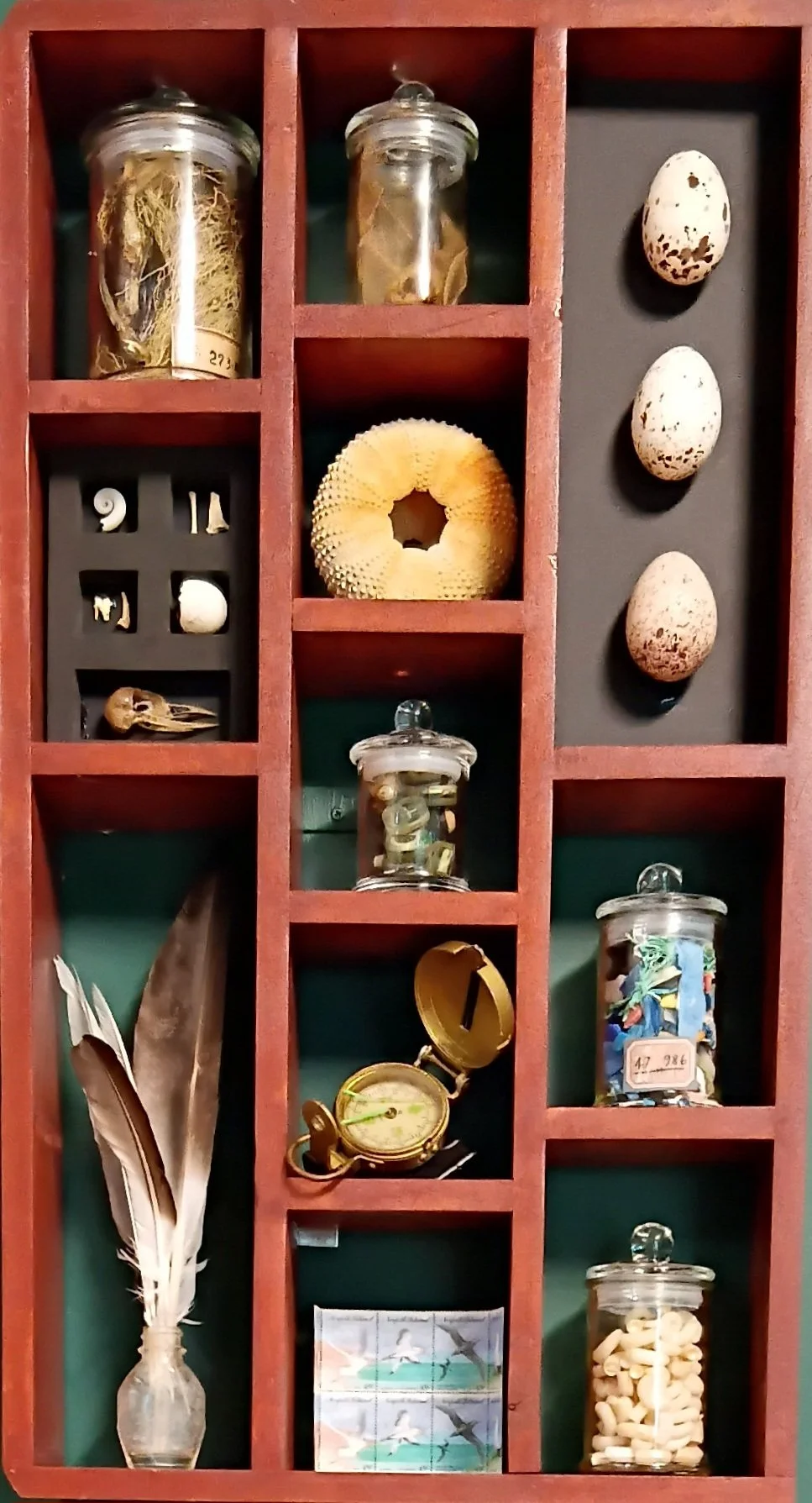
Among this collection of objects you will find: a small fish dropped by a White Tern, three Sooty Tern eggs, plastics that seabirds regrettably ingest, the discarded floatation devices of the Ram’s Horn Squid (a food favoured by our White-capped Noddies and White Terns), a stamp series celebrating our seabirds and a jar full of old-school trackers that were once attached to various Petrels to study their migratory behaviour.
14. MARINE MARVELS
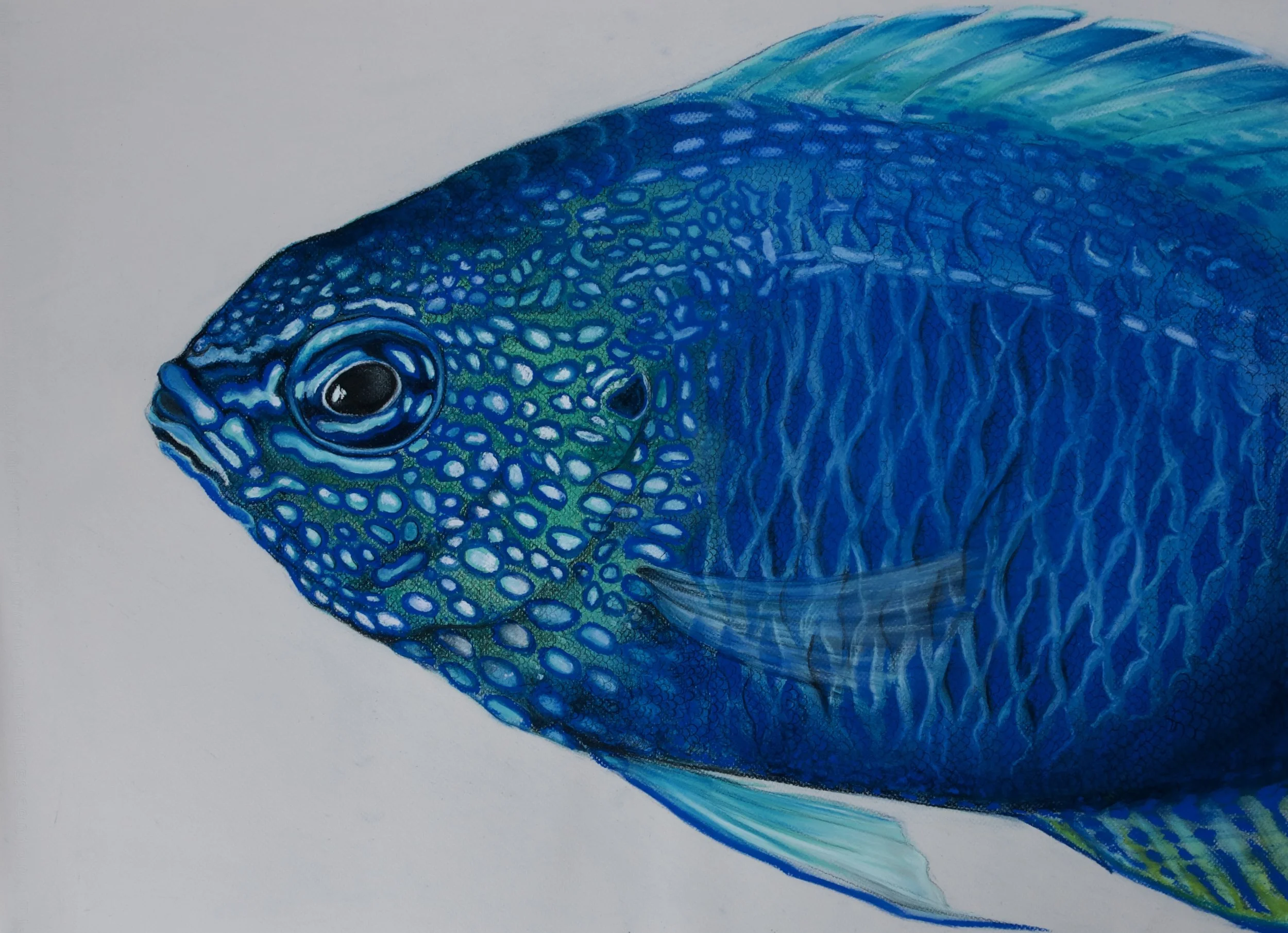
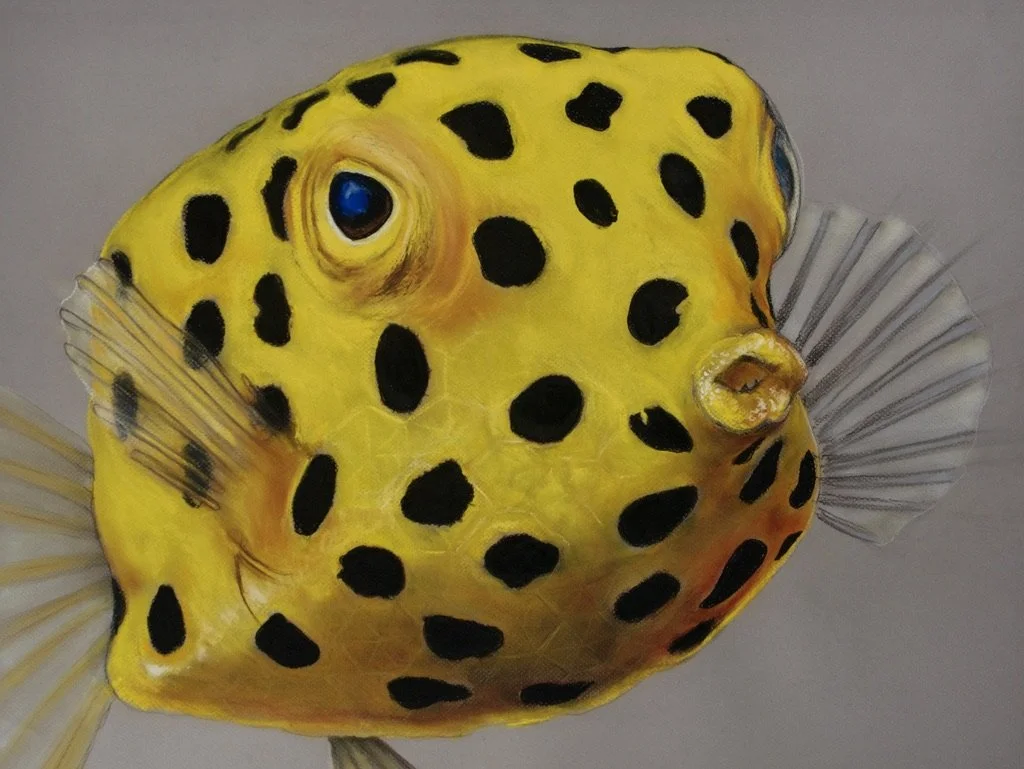
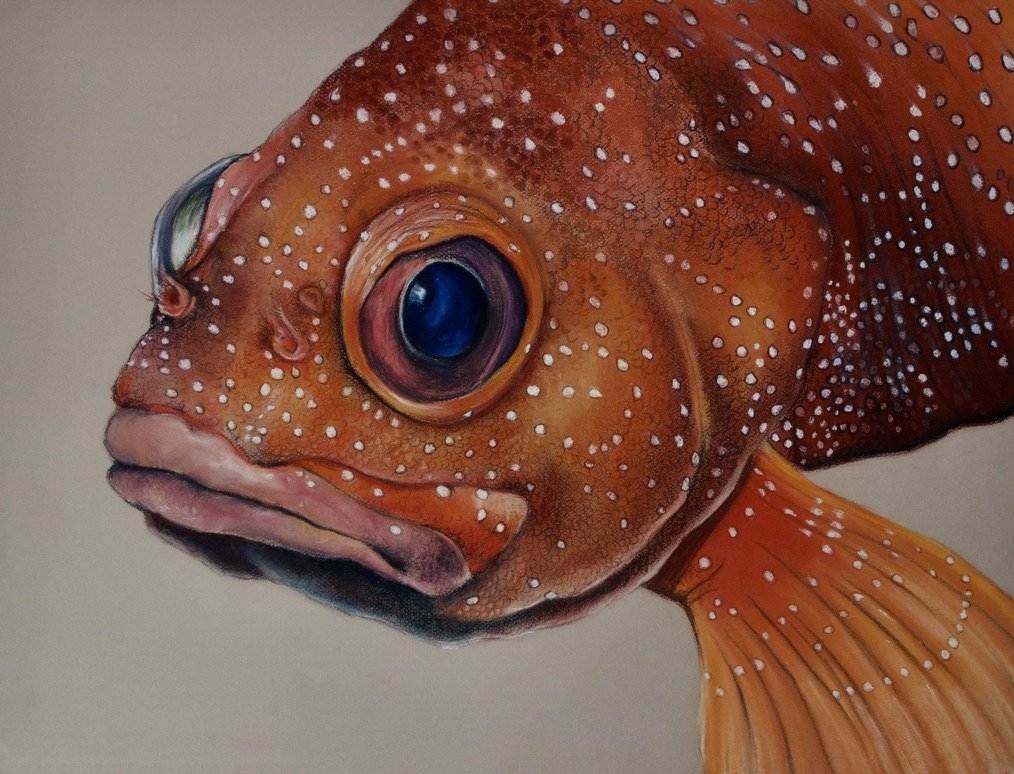
Norfolk Island is brimming with natural wonder, above and below the waterline. Its coral reefs are complex and interconnected, providing a habitat for well over 300 different species of fish - including (L to R) our enigmatic Yellow Boxfish, Peacock Damsel and Strawberry Cod.
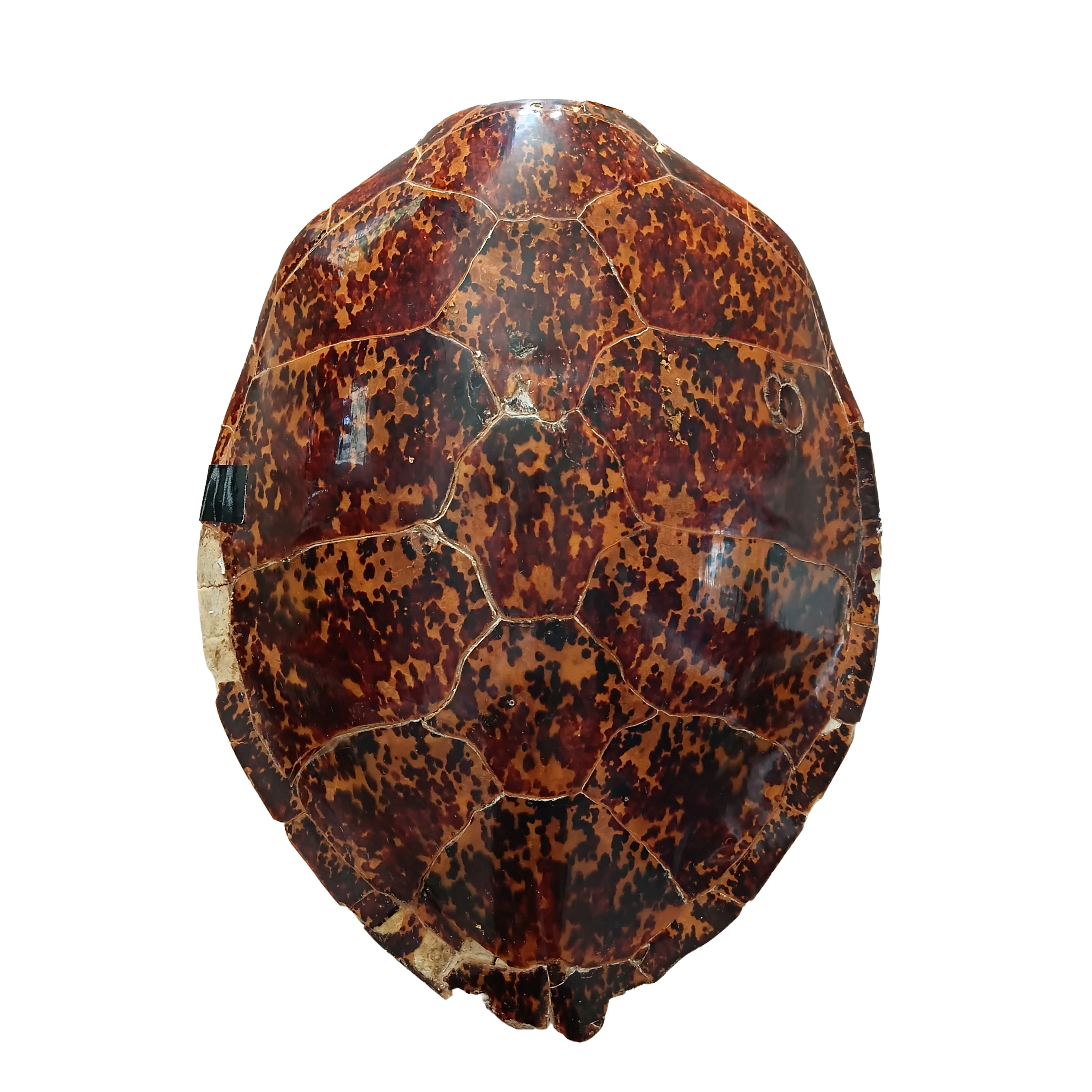
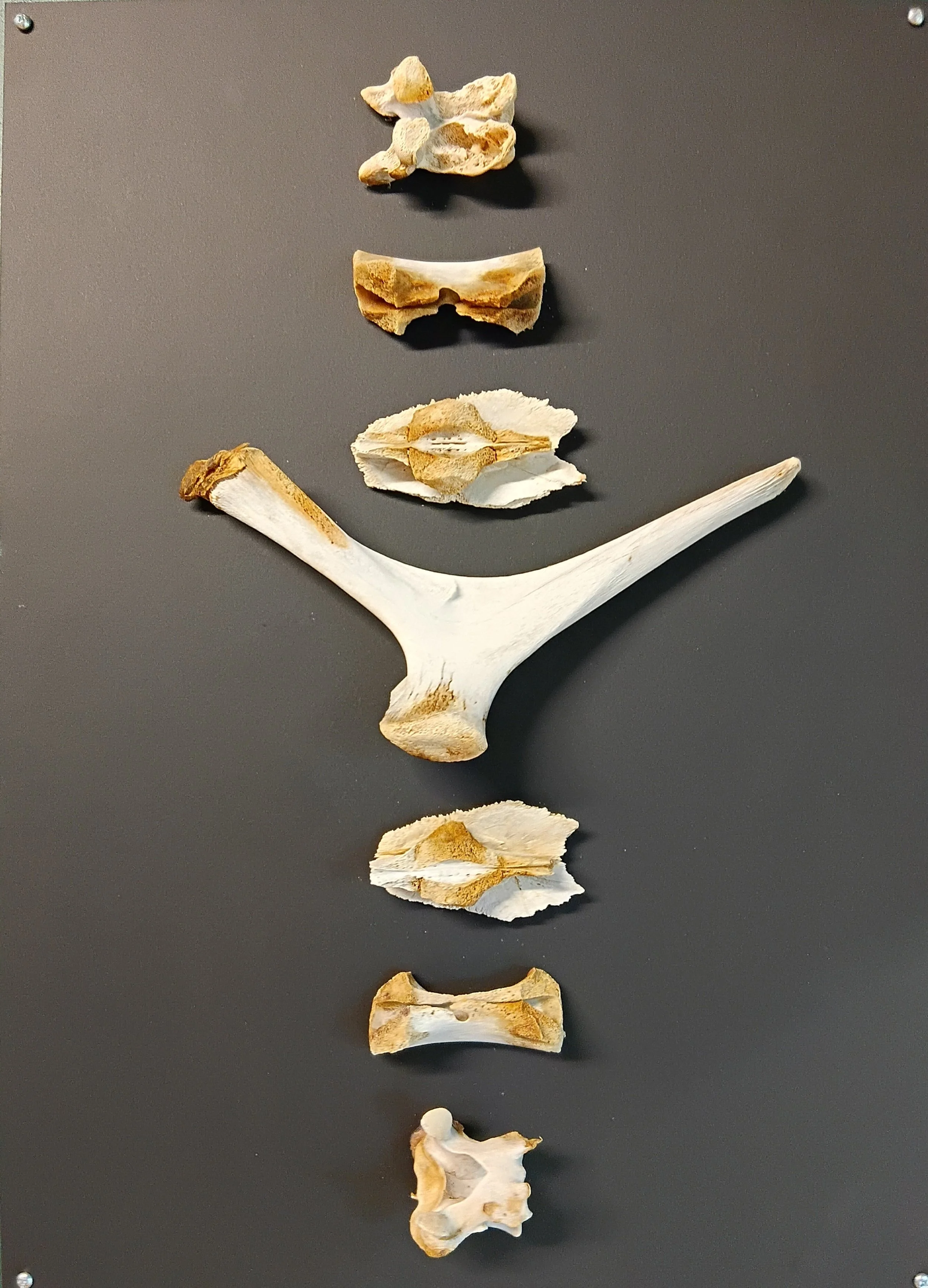
15. TURTLE BONES & CARAPACE
Hawksbill and Green sea turtles are regularly seen around Norfolk, In fact, there are several non-breeders in residence in Emily and Slaughter Bays! They are unique animals - the only vertebrates with an internal and external skeleton, both of which are on display in this gallery.
Curiosity is the starting point for every great adventure. It drives scientific inquiry and discovery, and opens us all to the wonders of nature.
CURIOSITY (GALLERY D)
16. MOLLIE’S BEACH COLLECTION
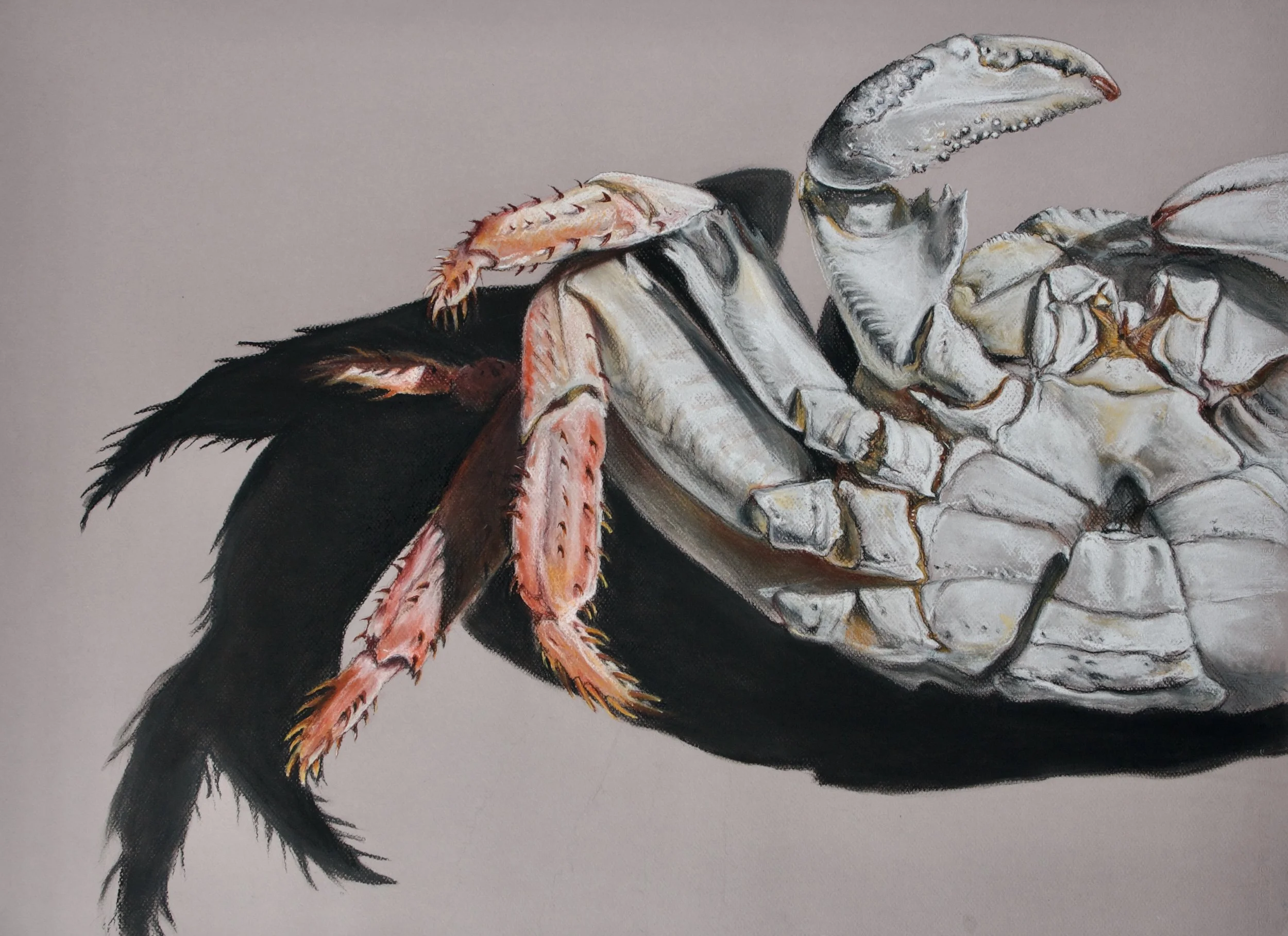
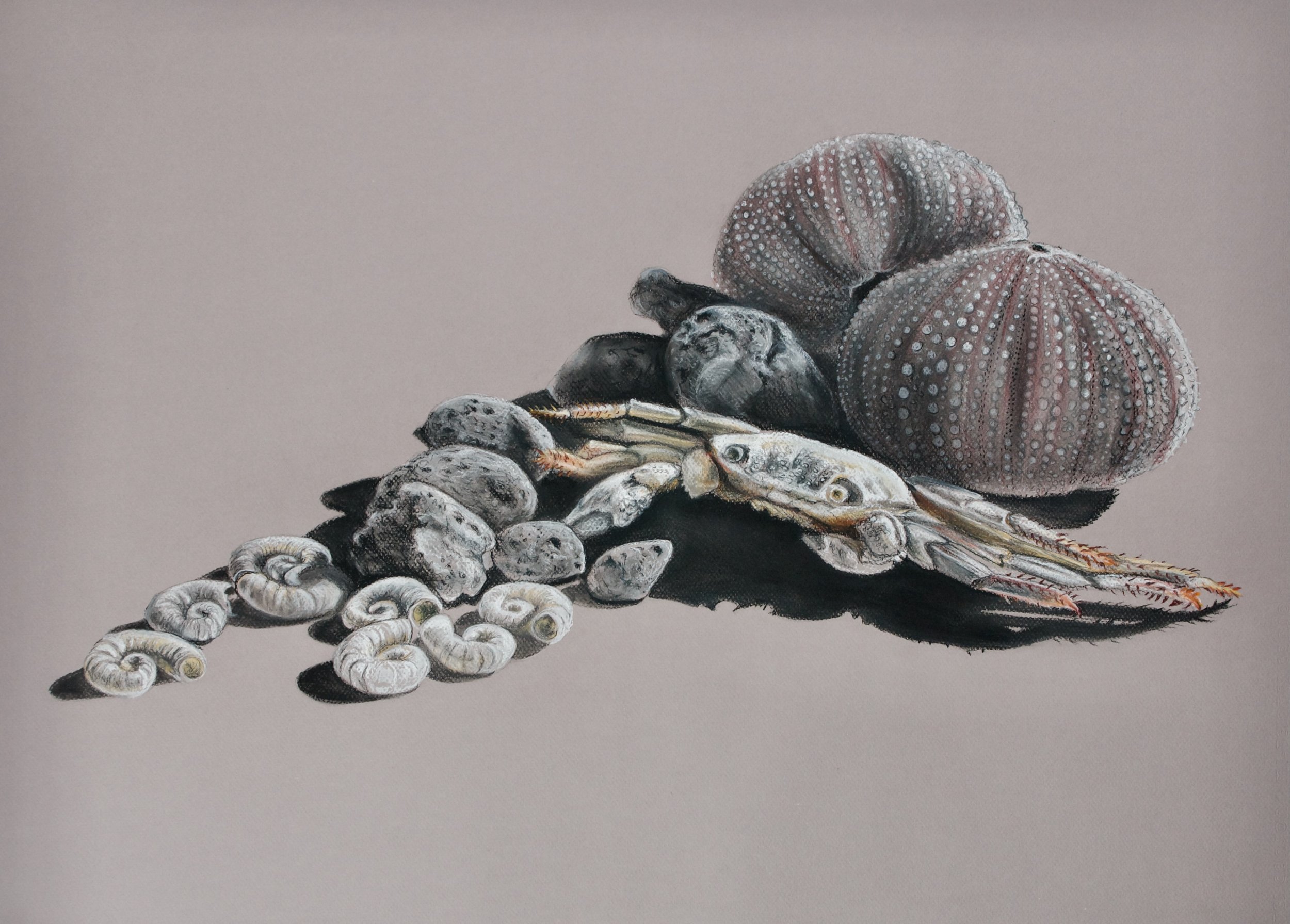
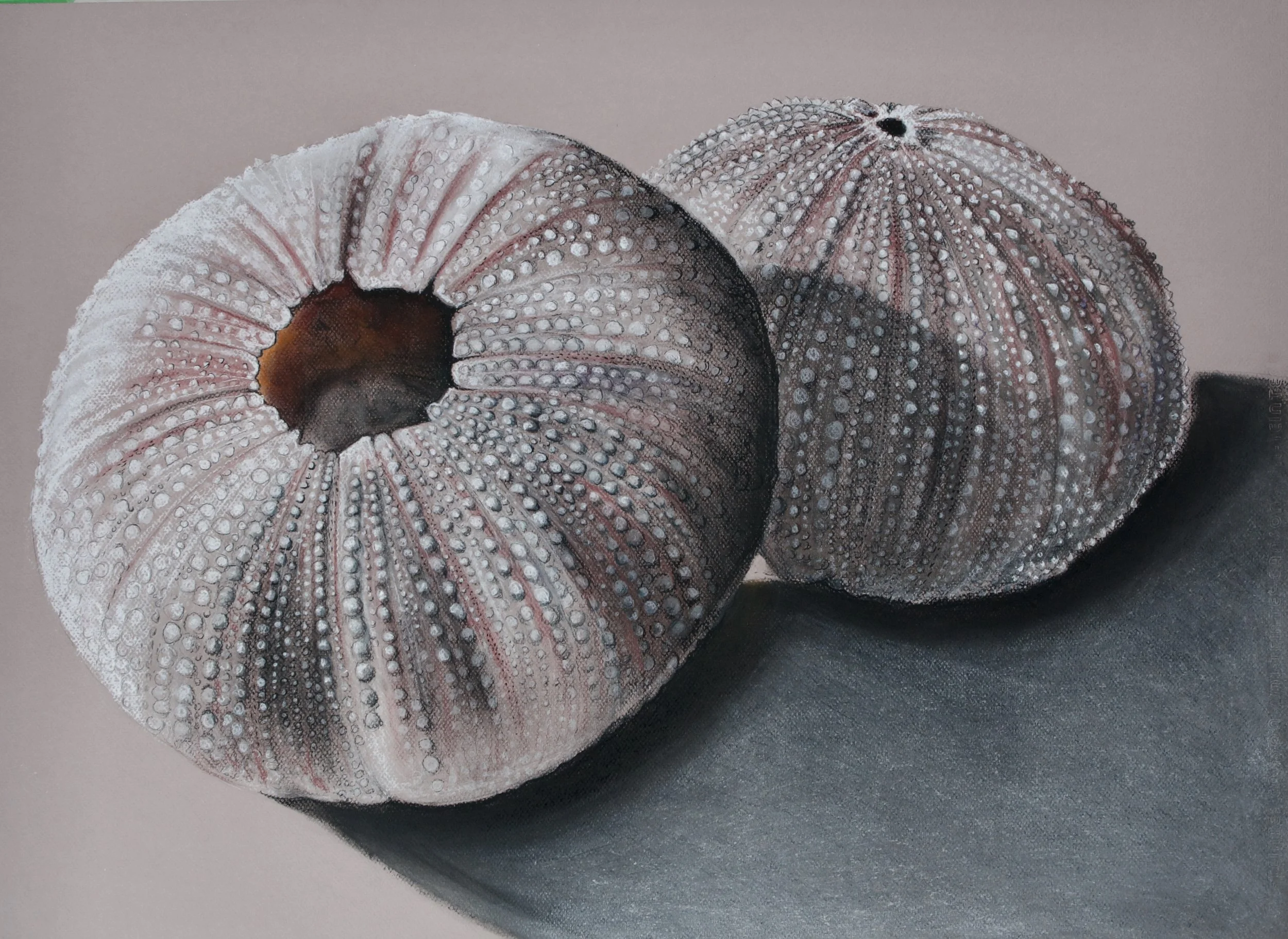
Mollie Sanderson is a Norfolk Islander with an abiding passion for nature, finding beauty even in its afterlife. The carapace of a ghost crab, the hollow ‘tests’ of two sea urchins and the delicate chambered shells of several Ram’s Horn Squid invite us all to do the same. To protect our environment and its finite resources, its best to beachcomb with your eyes! Taking only photographs, leaving nothing but footprints.
17. PURPLE SWAMPHEN SKULL
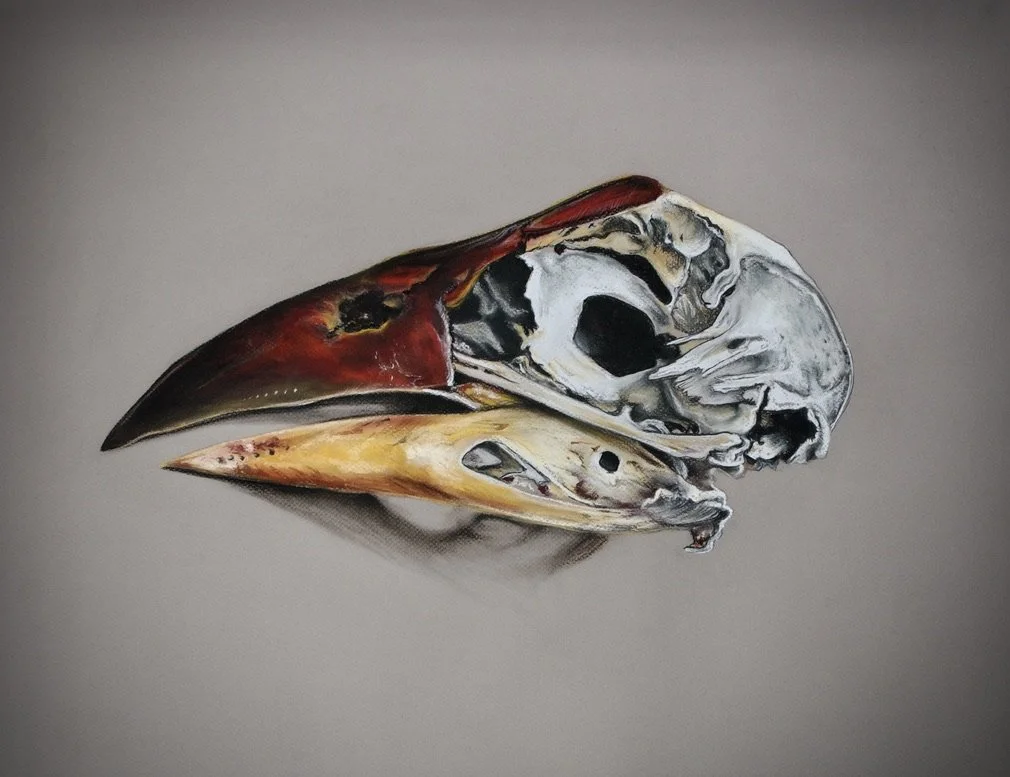
The architecture of skulls is endlessly intriguing. In this case, one belonging to a Purple Swamphen. Locally known as Taala birds, they are an unpopular breed as they regularly prey on seabird chicks and ravage agricultural crops.
18. THE TWO FROND FERN
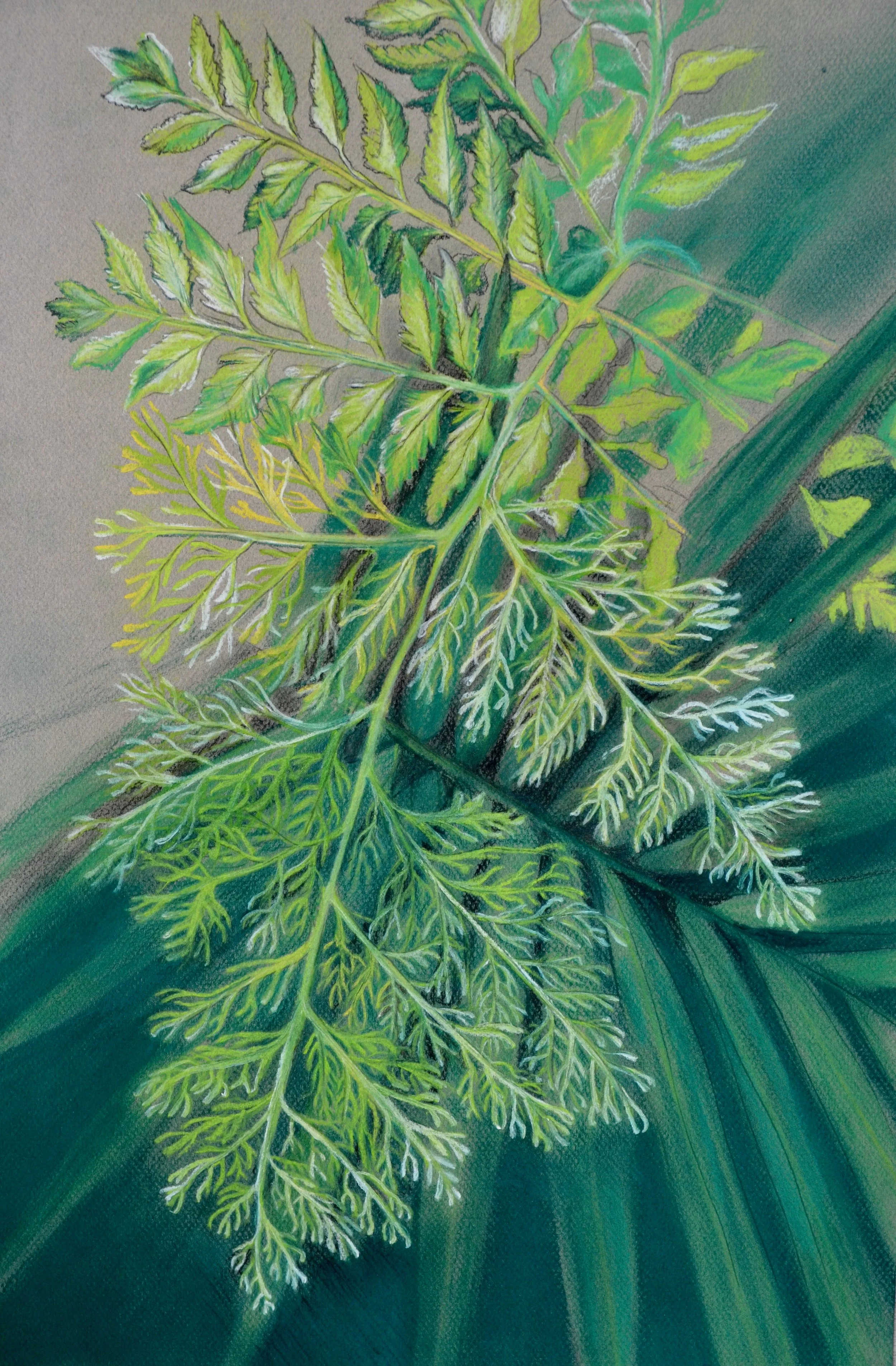
Shaded by the palms and a canopy of taller trees, ferns really flourish in the gullies that run down the sides of Mount Pitt and Bates.There are 44 different species on Norfolk including seven endemics. Among them, the aptly named Two-Frond Fern.
Our climate is changing and invasive species are strengthening their hold. But together we can make a difference. Advocating for a greener planet, a cleaner ocean, and a better life.
HOPE (GALLERY E)
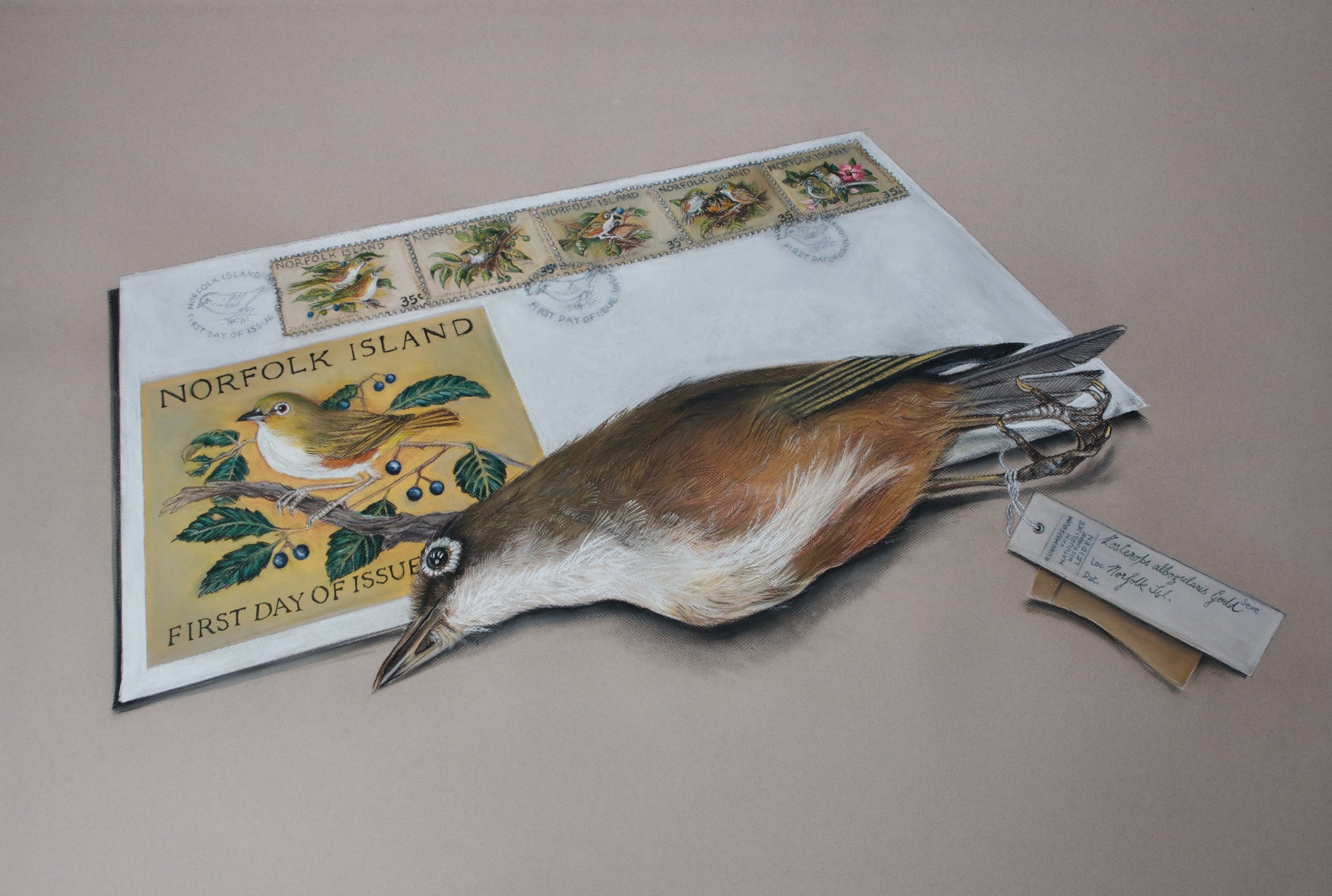
19. THE WHITE-CHESTED WHITE EYE
The original scientific description of Norfolk’s White-chested White-eye was made by John Gould, the ‘Father of Australian Ornithology’. But it’s highly likely his painting of the species was completed by his wife, Elizabeth. The dynamic duo failed to visit Norfolk Island during their 18 month sabbatical in Australia, so their scientific work and subsequent illustrations were wholly dependent on dead specimens others had been employed to collect on their behalf.
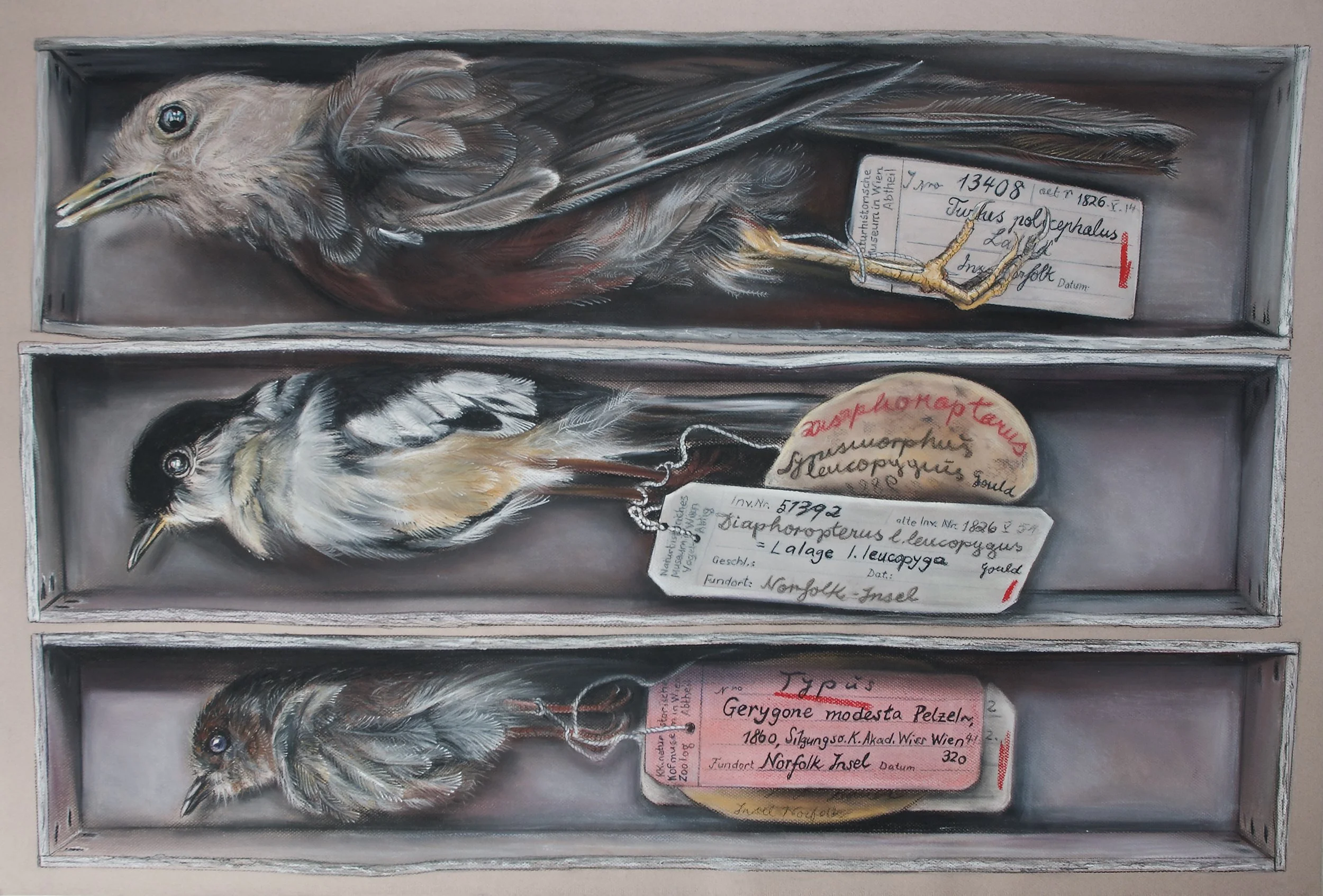
20. FERDINAND BAUER’S TYPE SPECIMENS
Ferdinand Bauer spent 8 months on Norfolk at the beginning of the 19th Century. He collected many of our unique plants and birds; including the type specimens* of two now extinct endemics: the Grey Headed Guava Bird and the Long-tailed Triller. The Gerygone, the smallest species in this illustration (and indeed on Norfolk) is still holding its own in the forest.
*Type specimens are the first example of an organism collected and described by scientists so are very important.
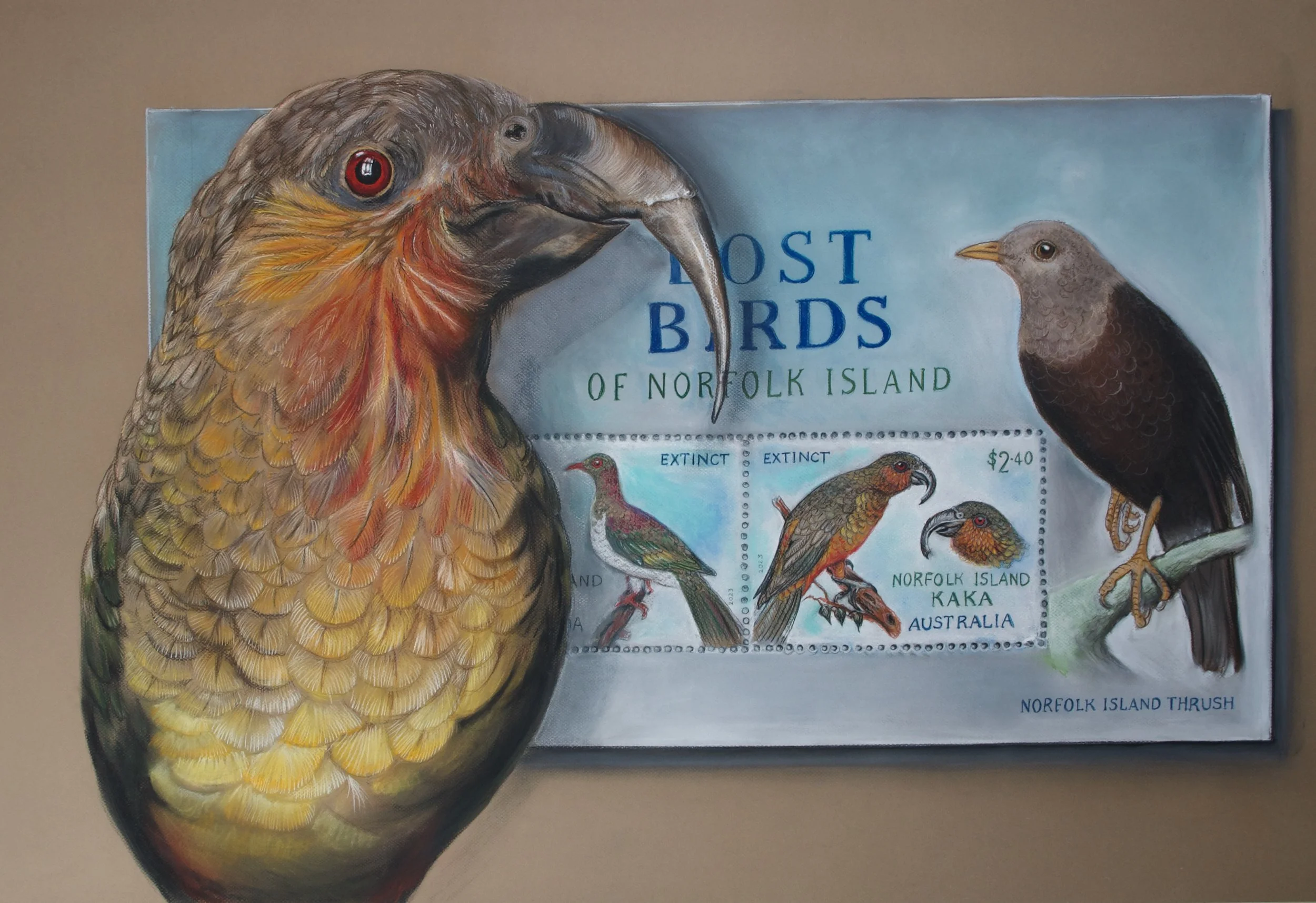
21. THE NORFOLK ISLAND KAKA
This startling stuffed bird was originally collected in 1834 by Baron Von Hugel - an Austrian diplomat and botanist who only visited Norfolk for a day!
A window from the Natural History Museum of Vienna - the institution that then became this Kaka’s “forever home” - is reflected in its glass eye. A First Day Cover from Australia Post, showcasing Norfolk’s Lost Birds, has been appropriated into the background of this drawing.
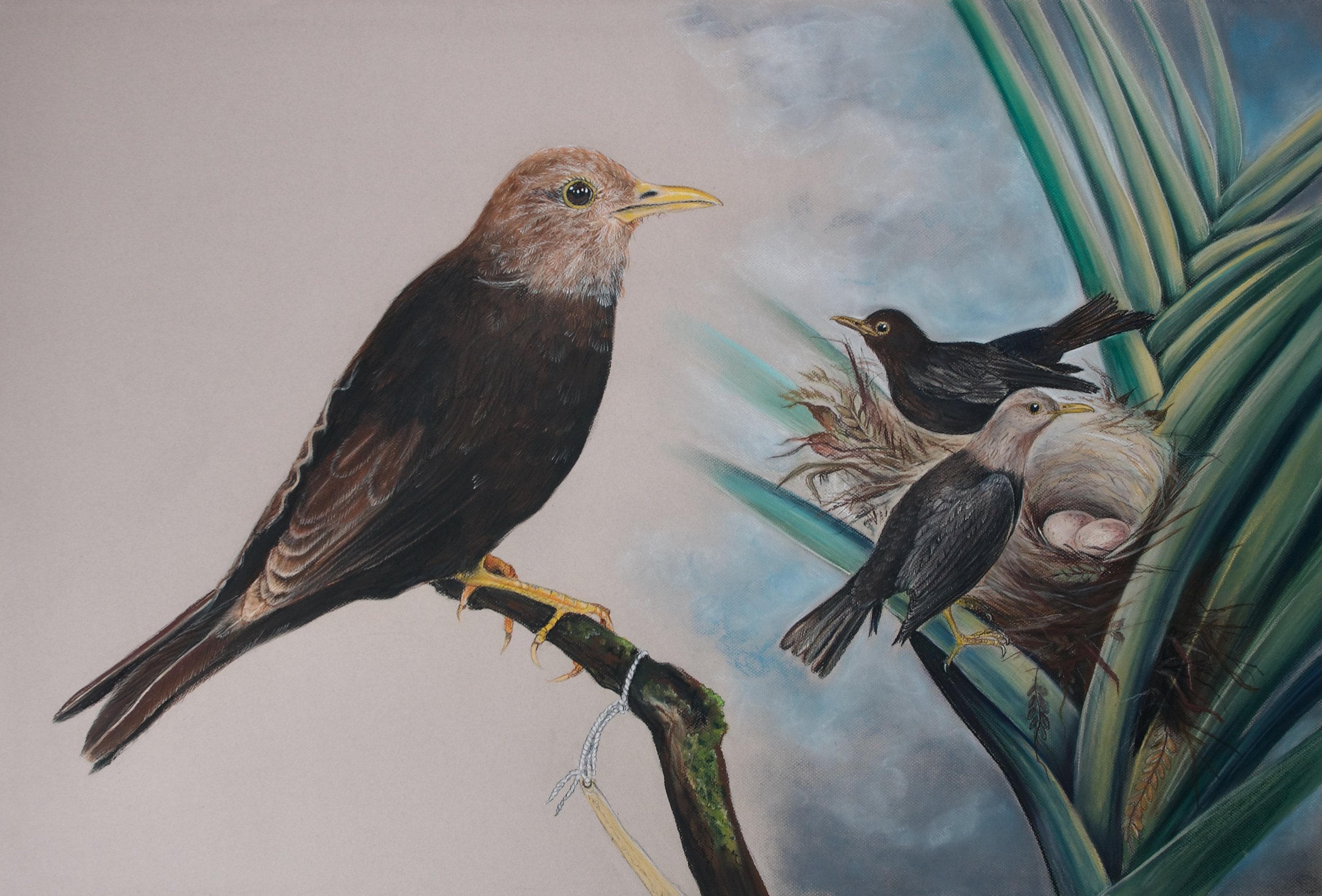
22. JAMES STUART & NORFOLK ISLAND’S GREY HEADED BLACK BIRD
James Stuart was an assistant surgeon stationed on Norfolk from 1838-1840. His watercolour painting of the Grey-headed Black Bird, or Norfolk Island Thrush, has been appropriated into the background of this drawing of a mounted specimen from the Auckland Museum in New Zealand. The species sadly succumbed to extinction in the 1970s.
IT TAKES A VILLAGE…
Pulling this exhibition together has been a labour of love supported by many friends, near and far. Some in a professional capacity; others who gave freely of their time and expertise to help me realise my dream. I would also like to take this opportunity to thank the Norfolk community who came forward - en masse! - to donate treasures from their private collections to help recreate that “Cabinet of Curiosities” vibe that was all the rage during the Colonial Era.
I am forever in your debt.
Agnes Hain
the whole Fe Morla team behind In The Wild
Lauren Yager (framing)
Sandra Ross and Keith Kutchenmeister (hanging!)
Mia Andersen (gallery branding)
JJ Gehan (calligraphy)
Martin Snell (lighting installation)
Dale Howe
Sue and Don Brian
The Norfolk Island National Park
Ariane and the Forrester family
Michael and Emma Davis
Lisa Wilkes
Ross (Rosco) and Gaelene Quintal
Meliami Plant
David (Dids) Evans
Melanie Dane
Jodie Quintal
Caryn Harrington
Susan Prior
Kath and Matt King
Lee-Ann Gottani
Greg Quinn
James Tweed
Simon Gorta
Nicholas Carlile
Mollie and Brett Sanderson
Helen Bosley
Margarita Sampson
Carli (Doosy) Christian
Zena Zeilstra
Caroline and Geoff Dunlop
Michelle Cook and Michael McCann
Michelle Deery
Helen Weldon
Jackie Pye
Shae and Ben Messina
And my extraordinary family: Chris, Aden, Ilana, and Ruby. Thank you all for believing in me and putting up with the insanity.